You’ll often see movies or modern pictures or even many modern books depict horses drawing the Prairie Schooners (or Conestoga wagons – but you’ve already heard my rant on that) out west. Or, even if they have oxen in place, drivers may be up on the seat with the reins. Well, it is my absolute pleasure and relief to inform you that neither of these are accurate.
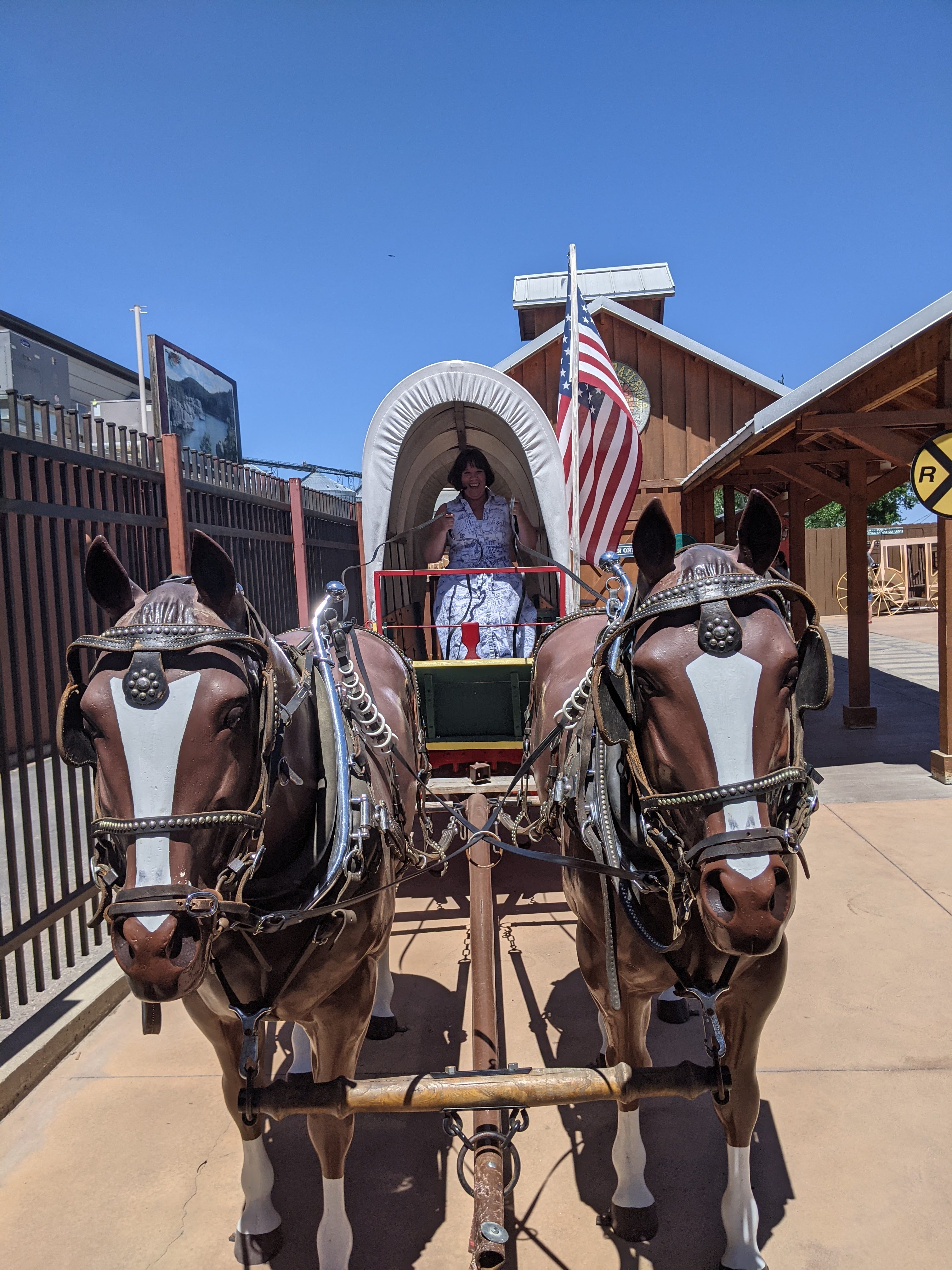
Whew. I finally got to tell someone. Seriously. It drives me crazy. So, what livestock exactly did the emigrants take?
The most common livestock to take along the trail were, not surprisingly, oxen, horses, and mules! It also wasn’t uncommon to have a few milking cows, and though they aren’t necessarily mentioned when describing animals on the train, I wouldn’t be surprised if pioneers brought some goats and other farm animals as well. But today, I’ll focus on the main three.

By now, most people know that oxen were used on the trail, despite shows like 1883 showing horses (at least, that’s what I’ve heard, not having seen it myself). And oxen did indeed tend to be the preferred animals. What some do not know is that oxen were just…cows. Usually steers who have been trained to answer to signals, visual and/or audible. Though, if a farmer didn’t have or couldn’t afford oxen, they could certainly hook a milking cow up to help pull as well. And you’d never sit on a bench and hold the reins because they didn’t have reins. No, you’d walk alongside them, usually with a whip, and direct them, as mentioned, with signals. Hence the reason you’ll see many prairie schooners don’t even have a bench for driving. Also, unlike most pictures, two oxen wouldn’t do the trick, especially at the beginning when the wagons were heavier. You needed at least 2-3 yoke of oxen pulling a single wagon – in other words, up to six oxen per wagon. And that’s before the spares. Yup. So, if you are being responsible, you’ll want to double that number.
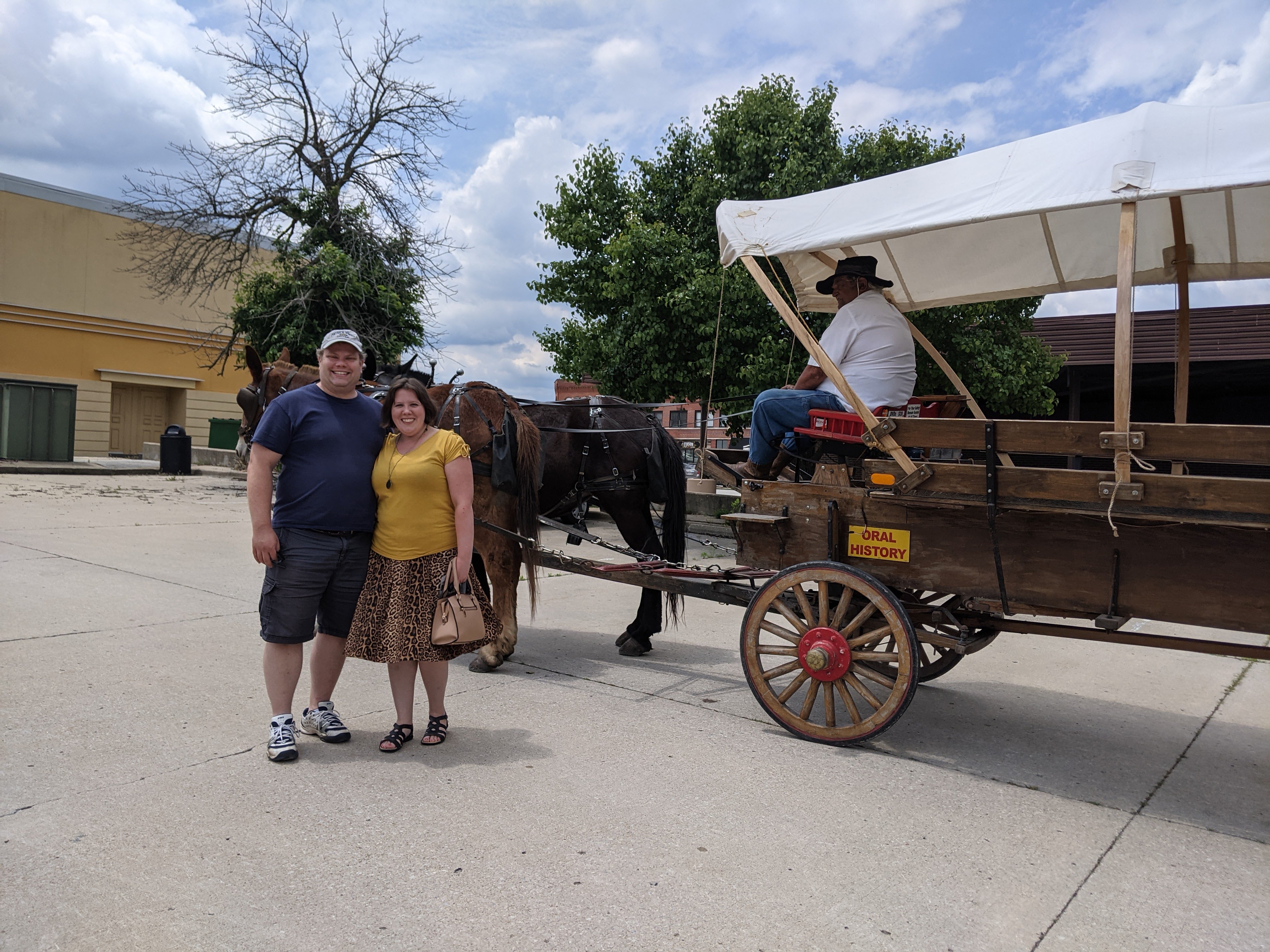
Now, if you chose to use mules, you would have a bench up there and you would drive them much as you would horses. So maybe I should give some movies the benefit of the doubt and say they are using mules, not horses (but I seriously doubt it).
Oxen were generally preferred because they were stronger and cheaper. They could pull heavy wagons and survive off of less food. They didn’t become ill as often, and made good food if needed. Mules were faster than oxen (really, anything was faster than oxen), but more expensive. According to The California Trail: Yesterday and Today, in 1851, an “outfit of five yoke of oxen, wagon, equipment and supplies” was a little over $500, whereas a six mule team was an additional $300. There are also complaints about mules being stubborn, though the guide in the above picture from a tour in Independence said that as long as you know how to handle them, they are fine. So perhaps it was inexperience that caused a mule’s stubbornness?


Now what about horses? Horses couldn’t pull a wagon across the trail. I mean, they could for awhile, probably. A large enough team. But they weren’t as strong or sturdy as oxen or mules, need a lot more food, a lot more water (whereas oxen can survive on little, which is necessary for a lot of parts of the trail, especially to California), were expensive, more likely to be stolen, and more susceptible to health issues. However, that didn’t mean the trains didn’t have horses with them. It wasn’t uncommon to bring horses along for riding (which was more comfortable than walking, of course), hunting, and to breed once emigrants reached their destination.
So, chances are, on your train, you would have plenty of oxen, some mules, horses, and milk cows, and that doesn’t even include the cattle that many men would drive along the train with them to start their ranches out west. It was basically a moving town of animals.
And that, my friends, is the livestock situation!
Resources
- Maxwell, W. A. (2016, September 8). Crossing the Plains, Days of ’57. Createspace Independent Publishing Platform.
- Hill, W. E. (2017, January 1). The California Trail.
- Erickson, P. (1997, July 1). Daily Life in a Covered Wagon. Puffin Books.
- The Oregon-California Trails Association. (2023). Overland Journal, 41(2), 80.
 Forest Idylls
Thank you for thr article. My midwest family rented goats to wagon trail folks as a good source of milk, butter, cheese. Not much more information. Ancestry site had tales about how they had a business. Mentioned the wagon trail settlers and goats.
I googled goats on wagon trail, read this article, so they more than likely had goats.
Oh, goats! That’s brilliant! I haven’t run into much information on bringing goats with them, but I bet you are totally right!