For this month’s Dinner at 1800, we are going on the trail! Yup, today’s recipe is from Mary Power’s diary when she was traveling to California in 1856, which means attempting to replicate it was quite an adventure. See the highlights over on Instagram! So many thank yous to my sister, Tianna, without whom, the reel would not have been possible!
Though it is available in multiple places, I pulled the description itself from Wagon Wheel Kitchens by Jacqueline Williams, possibly the best food research book I’ve ever run into.
Strawberry Dumplings
Wagon Wheel Kitchens
Mary Powers, 1856

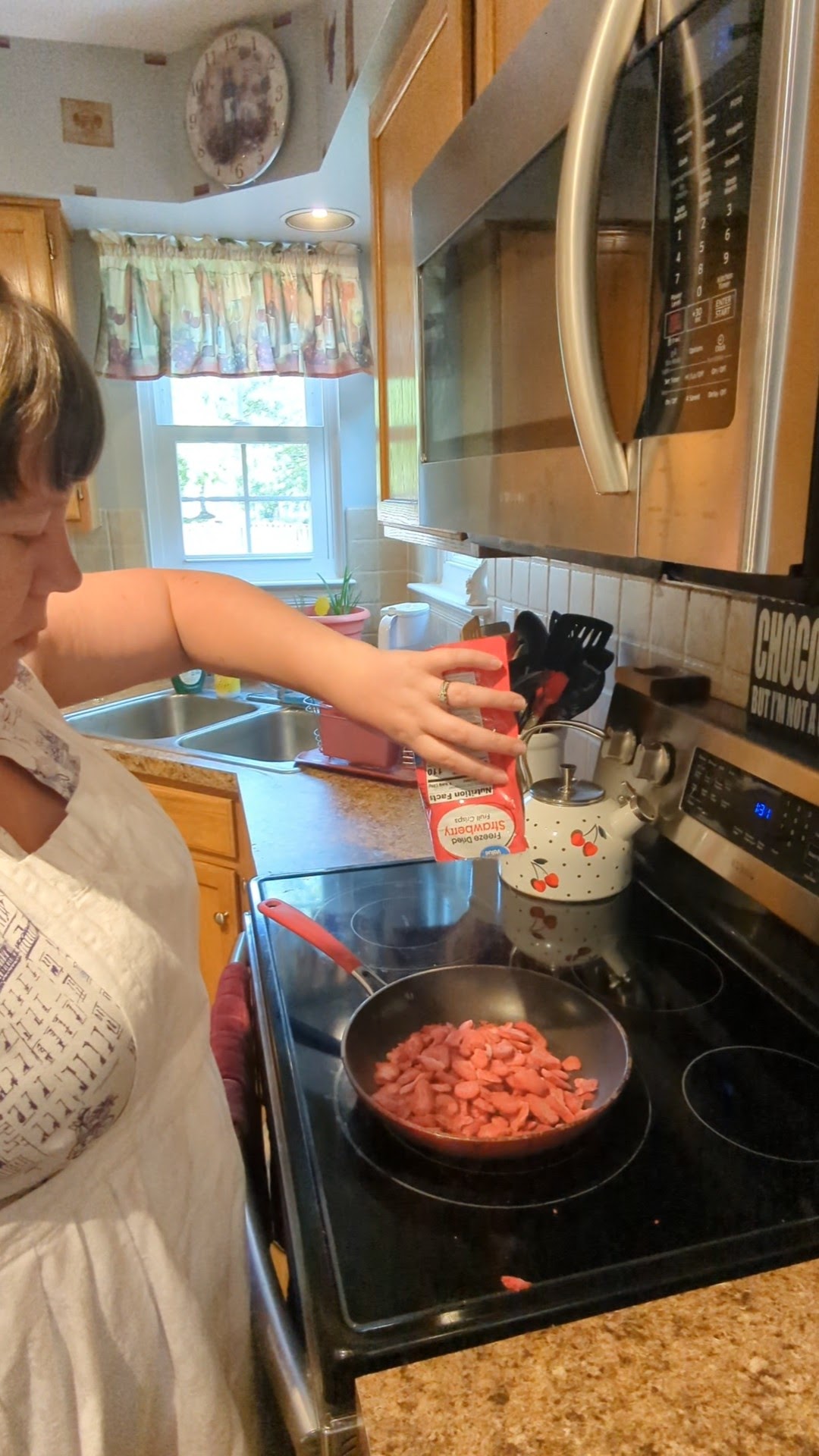
This recipe is one paragraph. Yup. A single paragraph. First, Mary says she stews the last of her dried strawberries, which gives no hint as to how many that is. So, I purchased 12 oz of freeze-dried strawberries from Walmart and dumped the whole thing into a skillet. Then…how much water to put in? Did it matter? Did she have enough fresh water at that time, or were they short on water? She doesn’t say, so I just poured in enough to more than cover the strawberries, and set it to simmer.
Next, I was to “wet a light dough.” Wet dough? How did I get the dough in the first place? What kind of dough? How much dough? How wet does it need to be? Without any additional information, I’m going off of other trail recipes and assuming that it is simply flour and water…and possibly some saleratus – currently known as baking soda. So, I threw random amounts in a bowl and mixed it together until it, surprisingly, looked like a pretty good dough!


Of course, then I tasted it…and let me just say, thank God salt is now a staple! Of course, they did also have salt on the trail, but sometimes they ran out and sometimes they didn’t use it in recipes, or at least didn’t bother to mention it because they thought it was obvious. I veered on the side of caution and assumed she didn’t have access to salt. I regret that now.
Mary says she rolled it out with a bottle…so I used a ginger ale bottle to roll it out, just for authenticity’s sake. Though, my guess is when she says she used a bottle to roll it out, she probably meant a brandy or whiskey bottle, since it was not uncommon for emigrants to bring those along for medicinal purposes (or at least allegedly medicinal). It spread out quite nicely, and I had high hopes. I even sprinkled some water on it to “wet the dough” as instructed. I regret that now too. It didn’t need more moisture.
I retrieved the stewed strawberries from the pan and began scooping it out on the dough. And that’s where it all went wrong. She made it sound so simple. Spread the strawberries over the dough, and roll it up in a cloth. Well, allow me to tell you that those stewed strawberries were apparently closer to strawberry soup and the dough wasn’t any too happy about it. And roll it up in a cloth? Did she mean roll up the dough first and then tie it in the cloth? Or roll it the way that you do a jelly roll? I had no way of knowing, but is seemed most likely you rolled the dough up first and then put it in the towel, so I folded the now soppy dough around the even soppier strawberries and then plopped the entire mess onto the towel, wrapping it around and tying it up (it didn’t say to tie it up, but how else would it stay in place??) while telling myself that maybe this was how it was supposed to look.


Once secure, I plopped it into boiling water. And didn’t set a timer because it didn’t say how long Mary kept it in the boiling water. It was supposed to be timed on instinct, I suppose. Which I don’t have since I have never made a boiled dumpling before other than like chicken and dumplings. But, you know, I still had high hopes. How hard could it really be?

So I went to the next part of the recipe, which said Mary put a little sugar and the “last bit of nutmeg” into the strawberry juice for a sauce. I’ll tell you, I probably put way more sugar in than she did because after tasting those dried strawberries and the dough, I figured it would need it. And I was pleased, because that, at least, worked, and, I can testify, tasted delicious.

Then came the hardest part. When on earth would I know when that giant dumpling was done?? At some point, I pulled it out, unwrapped it a little, and threw it back in. Another tenish minutes, and I pulled it out again, unwrapped it, and stared at it. I’ll be honest. It was not a pretty sight. My sister posted a poll on her Instagram asking people to guess what it was, and one guess was rotten flesh.
And yet, miracle of miracles, when I sliced into it…it looked like bread. Yup. Cooked through. So, I sliced it up, poured a generous amount of the sauce over it, and served it to Daniel.


He didn’t spit it out the first bite. But when we gave him permission to do so the second time, he didn’t hesitate. Flavorless, with barely any strawberry flavor, other than the sauce, it was not worth eating, I assure you, no matter how pretty it looked (after it was sliced).
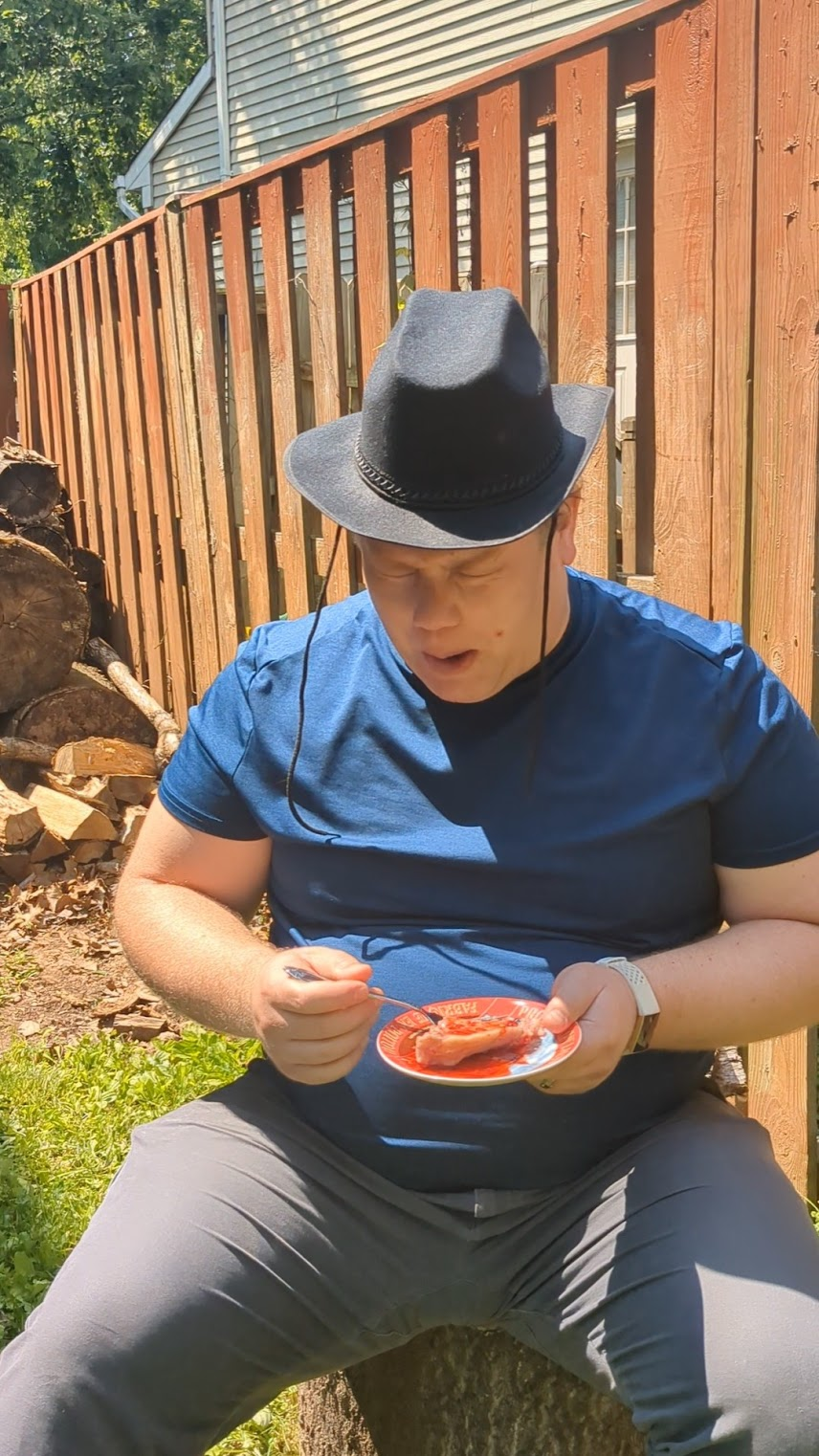
Now, did I make too much dough for the amount of strawberries? Should I have put salt in it? Did I boil it too long? I may never know, but this I do know – for anything near what this was to be considered “quite a dessert” by Mary Powers, they must have been desperate indeed for something sweet on the trail.

 Forest Idylls
How fun! Your struggles remind me of my mother-in-law, who cooked often by measuring amounts in her hand. She also rolled pie crust out on a floured cloth. In our early years of marriage, my wife would be frustrated when she asked mom about the amount of an ingredient to use and got an imprecise answer.
So impressive! And ha – I also hate imprecise answers…it was probably a good stretch for me to try this. 🙂
That’s so interesting. My Czech ancestors had recipes for fruit dumplings, but generally it was a whole stone fruit wrapped in dough and then boiled. The dough itself is pretty bland, so the dumplings were often served with melted butter, extra sugar to sprinkle, and sometimes cottage cheese.
Mmm, that sounds good! Maybe I should try your version. 😛