I’m just going to say…this didn’t turn out how I thought it would. Then again, I really didn’t know what to expect, consider the recipe was all of two sentences. Reprinted in Wagon Wheel Kitchens, the author pointed it out as something that they might have made on the trail due to the simple instructions and ingredients. Don’t forget to check out the one minute Instagram version!
Superior Molasses Gingerbread
Wagon Wheels Kitchen
Published in 1847, originally in American Agriculturist 6

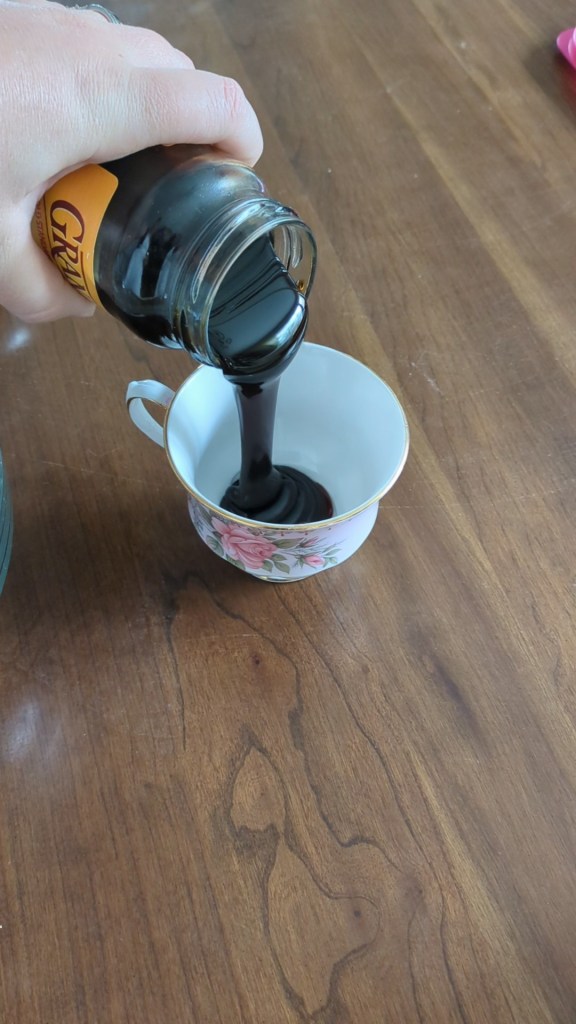
Step One: First of all, most of these steps were actually a single sentence. But I split it up so I actually had something to write. And first step? Start with two tea-cupfuls of molasses…now, according to my vintage measurement chart, that is about half a cup – but I decided to actually take a teacup and measure it out! When I did so, the teacup was definitely larger than half a cup…so I only partially filled the teacup.
Step Two: One tea-cupful of butter – thankfully, when I smashed a half cup of butter into the teacup, it turned out to be about the same amount as the molasses I used, so I knew the measurements should be about right.
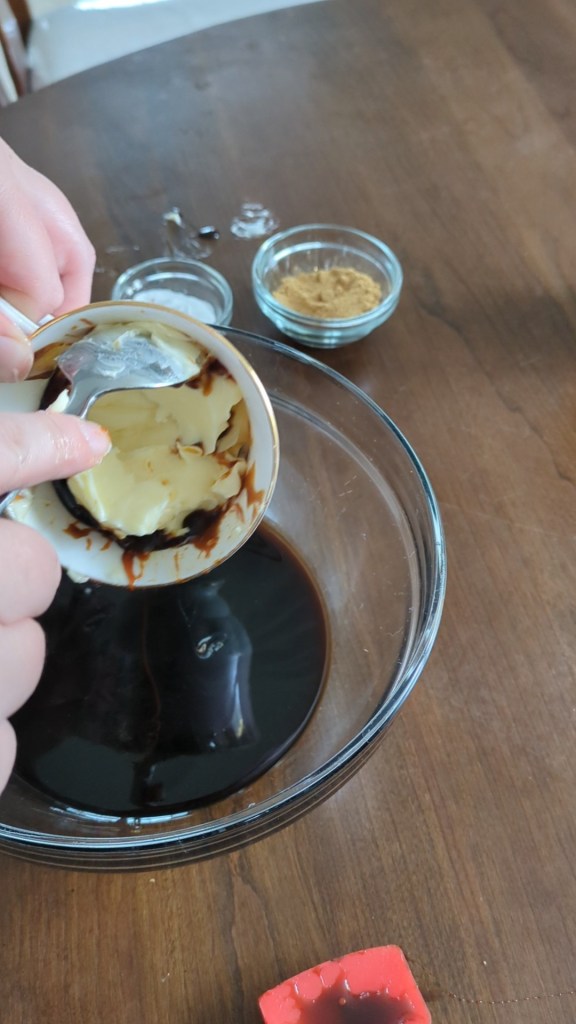

Step Three: Mix in a tablespoon of ginger and a couple teaspoons of saleratus – which is, of course, baking soda.
Step Four: Mixing well, per the instructions, took a lot of work to make sure the butter actually got all worked in, but I was impressed at the way it actually seemed to form into a type of batter, despite the lack of flour (and yes, I reread this two sentence recipe multiple times to make sure I didn’t miss anything).

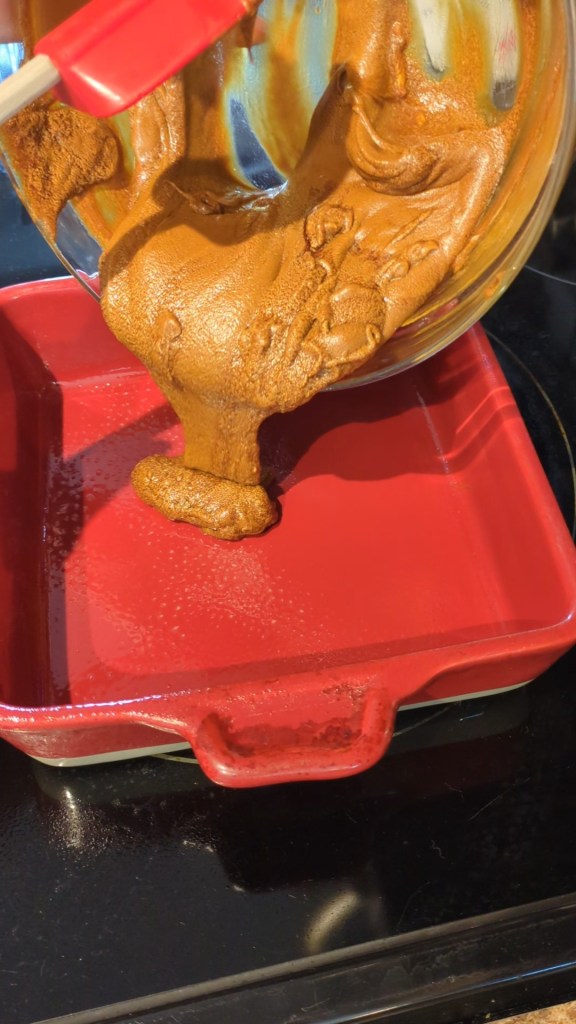
Step Five: Previous to this step, we got actual measurements. But the final step in this recipe? Bake Quick. That was it. So I went ahead and put the oven at 400, poured the batter into a square pan, and set the timer for ten minutes.
Step Six: This step wasn’t in the recipe, but it was a step nonetheless. Figuring out when this supposedly “Superior molasses gingerbread” was done. Ten minutes in, it was boiling enough that I was a little afraid it might overflow (it didn’t). But there was no sign of it thickening, which I kind of assumed it would do like flourless cookies do. So I baked it longer…and then a little longer…and then smelled burning. I took it out, despite the fact it was still…well, liquid.

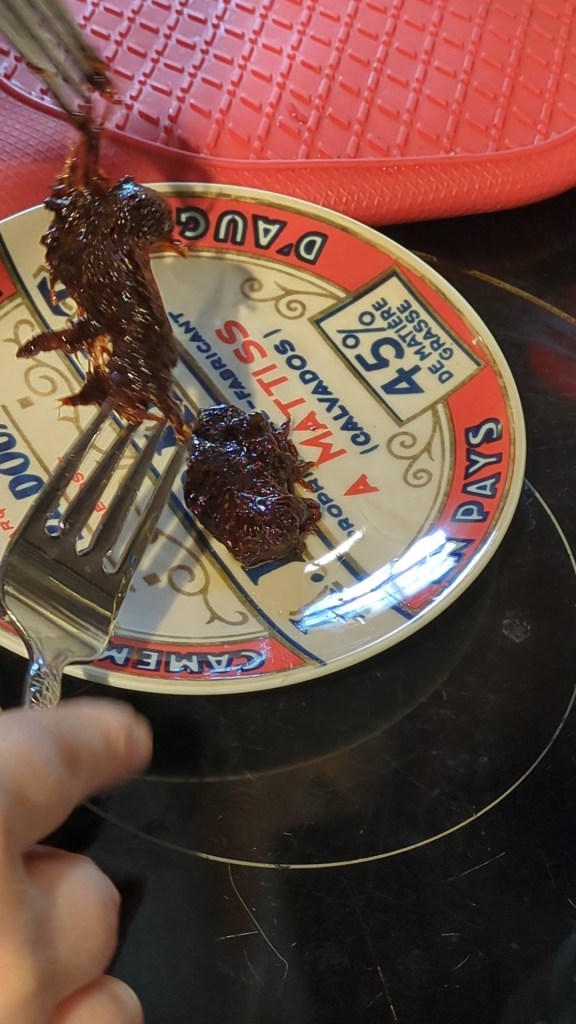
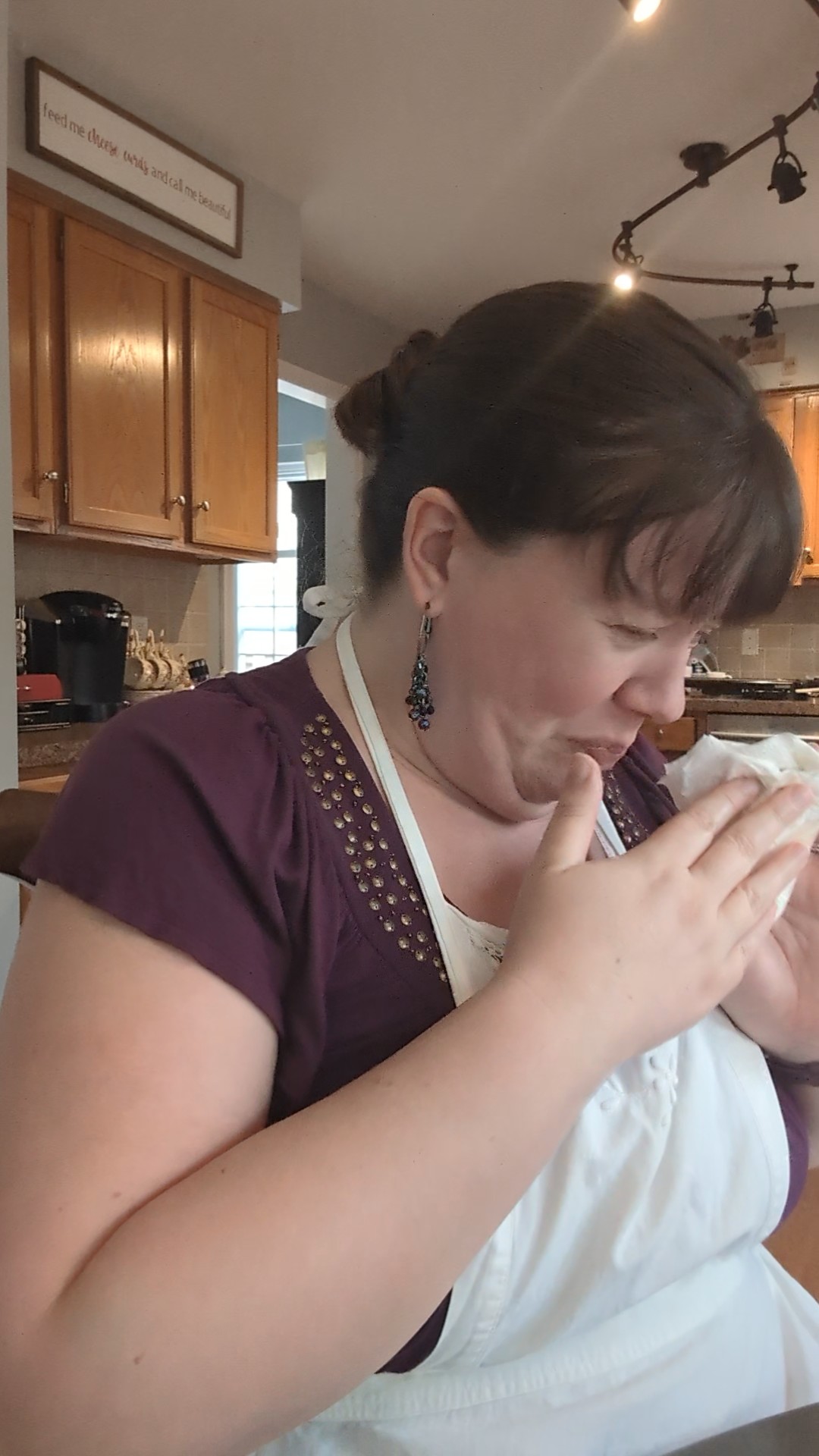
Step Seven: Again, technically not in the recipe. I made an executive decision to wait until the “gingerbread” cooled to try and cut it…you know…since it was liquid. And once it cooled it was more like a really sticky candy. So I guess at least the molasses part was right? I could barely get pieces out of the pan, and once I did and it started cooling, I realized there was a good chance it was going to harden like overdone taffy, so I told Daniel we had to test it while he could still chew it.
Okay, so, all in all, the verdict was: No. Just no. First of all, it was nothing like gingerbread. Second of all, it was definitely burned. Third of all…again, just no. Though, I am curious to know what would have happened if I had taken it out earlier. Would it have been more of a soft caramel texture? I even thought maybe the book misprinted it and forgot the flour – because the way the recipe went made no sense to me, so I tracked down the original source (thank you, Google books!), and, nope – that’s precisely how the recipe went.
So, I’m curious – do any of you have thoughts on a recipe like this?


 Forest Idylls
LOL, gotta love those old recipes that leave so much scope for the imagination! Most of the recipes are just suggestions, assuming you know what to do with them. I’m betting it was meant to have flour, cornmeal, oats… SOMETHING to thicken and bind the ingredients that was overlooked when writing it down… or they just assumed you’d know to add something more.Kuddos to you for being brave enough to make it as written, when obviously there was something amiss with the recipe.
I totally agree! It felt as though the author of the recipe expected you to know something I didn’t. LOL – it was fun to try, though!