I know, I know. Last month, I said the Mahaffie House was stop 1. But I’ve updated that to be a stop 1 alternative. Because, especially in this first part of the trail, the first major stop really depended on what jumping off town you chose, what route you decided to take, and even what year you were traveling! And, say you were traveling from Independence BEFORE the Mahaffie House opened? Chances are your first major stop would be Lone Elm Park. Often noted as the first campground along the trail, that also would depend on which jumping off town you chose and how far you traveled that first day. But it likely would have been the first noteworthy stop in your journal, as indicated by the number of diaries that mention it (this article by Craig Crease has an impressive number of references, if you are curious).
I do want to sidetrack for just a moment and mention the Blue River crossing. If you played the Oregon Trail game growing up, you’ll know that basically the first stop is the Blue River (Or Kansas River, in the old version) crossing. I am not offering many details on that river crossing because, frankly, even in my research for my book, I had a hard time finding any without it being mixed up with the Big Blue river crossing after alcove springs. However, it is worth noting that shortly after leaving Independence, the emigrants would most likely have had their first experience with a river crossing, and you can find a brief description, along with a diary quote here: National Park Service: Minor Park
Still one of the first places that people stop when traveling the trail, if only to see wagon swales, it appears to have, in earlier years, been an entire grove of trees and therefore a comfortable camping area. As the years passed, that grove eventually dwindled down to a lone elm, hence the most well-known name, and eventually even that tree became little more than a stump. Nonetheless, it continued to be a popular camping stop a day or three out from your jumping off town.
If my fictional family were to leave on April 1st, they would likely reach Elm creek around April 3rd.
James A. Pritchard, May 3, 1849 – “… we reached the noted lone Elm, where we encamped for the night. This lone tree stands on the bank of a small stream, with no other tree in sight, all the branches have been cut from it by traders & Emegrants (sic) for the purpos (sic) of fuel….”
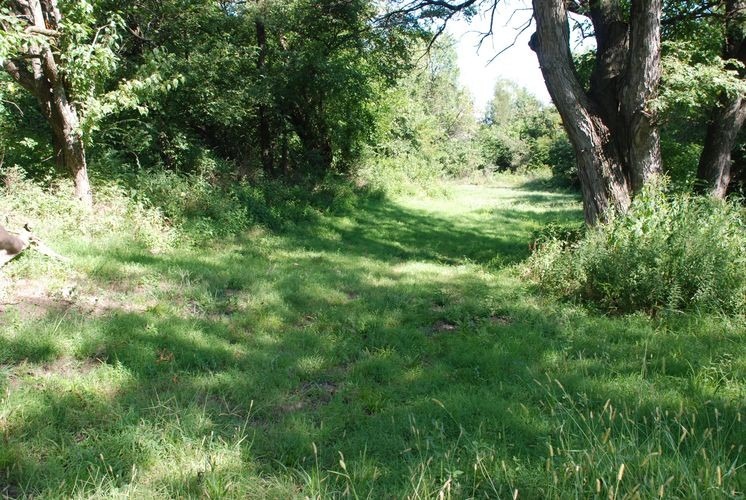
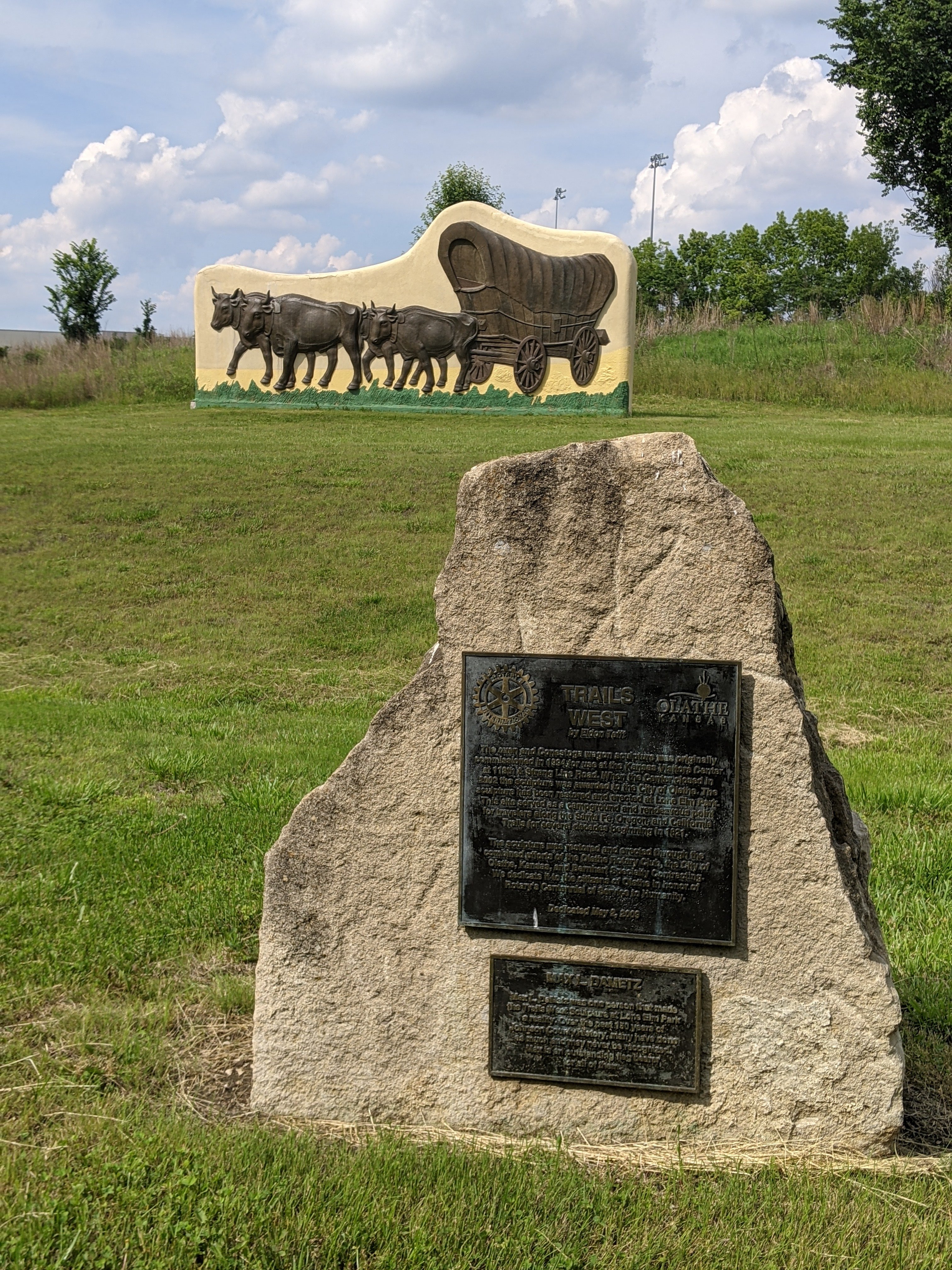
Now, I have to admit, Lone Elm Park/Campground simply looked like a manicured park to us when we visited in 2021, but now that I know better what I am looking for (especially what wagon swales can look like), I’d love to revisit it.

Possible stops along the way to the Lone Elm (courtesy of the National Park Service)
See below for full map, and note the tiny orange line indicating how far we traveled!
Resources:
- Clio. “Lone Elm Campground and Wagon Wheel Tracks – Clio.” Accessed March 16, 2025. https://theclio.com/entry/89976.
- Crease, Craig. “LONE ELM AND ELM GROVE: A CASE OF MISTAKEN IDENTITY?” Kansas Historical Society, 1993. https://khri.kansasgis.org/photos_docs/091-3828_4.pdf.
- Fanselow, Julie. Traveling the Oregon Trail. Falcon Guides, 1997.
- “Lone Elm Campground Historical Marker,” February 24, 2023. https://www.hmdb.org/m.asp?m=34334.
- “Mileposts along the Oregon Trail – Missouri.” Accessed March 16, 2025. http://www.oregonpioneers.com/Milepost1.htm.
- National Historic Trails Auto Tour Route Interpretive Guide: Western Missouri Through Northeastern Kansas, 2005.
- OCTA. “The Oregon & California Trails in Missouri and Kansas.” OCTA, July 5, 2022. https://octa-trails.org/the-missouri-and-kansas-trails/?srsltid=AfmBOor1j5_0Yg67FPpCZ9TRTiK6yZr-DajvRHlGV3HQI_417ZJaQooR.
- River. “PACIFIC OCEAN,” n.d. https://www.nps.gov/oreg/planyourvisit/upload/National-Park-Service-Oregon-Trail-Map-508.pdf.
- Santa Fe Trail Association, Oregon-California Trails Association, City of Gardner, and National Park Service. “Visit the Trails – East.” Santa Fe, Oregon, and California Trails, n.d. https://www.nps.gov/safe/learn/historyculture/upload/Visit-the-Trails-East-508.pdf.
- “The Travelers Historical Marker,” December 26, 2022. https://www.hmdb.org/m.asp?m=34355.
 Forest Idylls