
For as long as I can remember, I have thought about Independence, Missouri almost synonymously with the Oregon/California Trails. I knew it was the main jumping off town and I was one of those strange people who dreamt about seeing it one day. I didn’t even know until I started in-depth research for my book that there were alternate jumping off towns! I was so excited, then, when, in 2018, a business trip took me only about an hour away from Independence, and I finally got to see it in person. Excited and…disappointed. Because all I could find in the short time I had between my meeting and flight was a single museum talking about the trail. I didn’t understand why this wasn’t a huge, bustling town filled with memorabilia and information on the trail! And, indeed, it is currently about 500,000 people short of the population around the gold rush years. Because back when Independence was the main jumping off point, thousands upon thousands of people passed through and, in response, business sprang up to provide all the services and products those emigrants could possibly need.
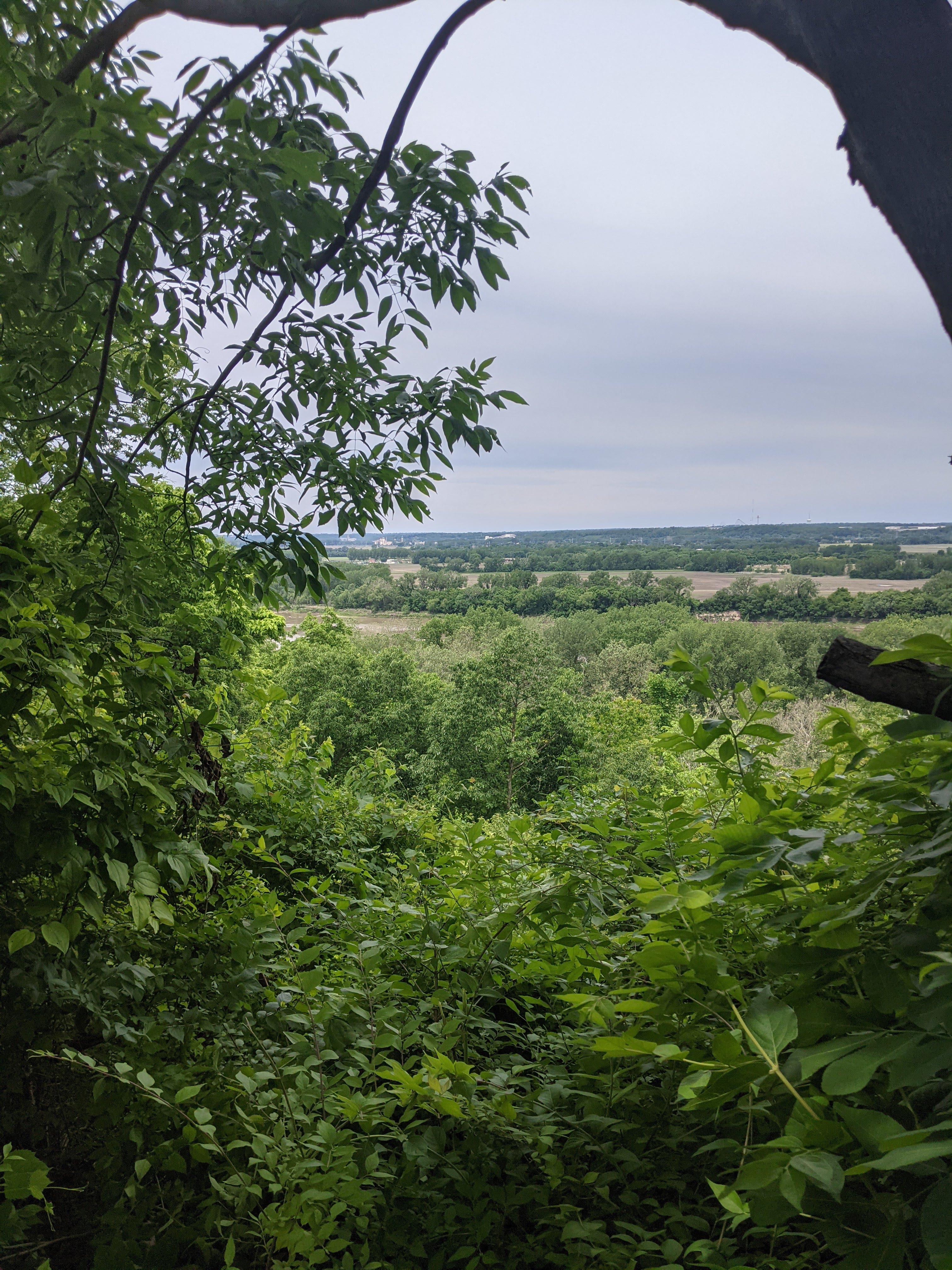
Most popular in the 1840s through the early 1850s, most emigrants started in surrounding states. While there were certainly many who simply took their wagons all the way to Independence, there were many more who got as far as St. Louis and took a steamboat down to Independence, landing at either the upper or lower landings. To be honest, this is one part I’ve been confused about in all my years of research. All I know for sure is that there was an upper and lower landing, and the upper landing was also known as Wayne City Landing. Legends of America says that Wayne City Landing wasn’t as well used as the Lower Independence Landing or Westport Landing (a little further along). Oregon-California Trails Association (OCTA) has a few diary excerpts from 1846 and 1850 respectively, referencing Lower Independence Landing, which they apparently called Blue Mills Landing, one of which says that Wayne City Landing was more popular, which directly contradicts the Legends of America comment. There’s another article from OCTA that says after 1849, flooding at the Independence landings encouraged most travelers to go to Westport Landing instead. So I’ve taken all of these difference sources and decided it all depends on perspective (or there is information that has been lost over the years or that I’m simply missing – so if you read this and have insight, feel free to chime in!).
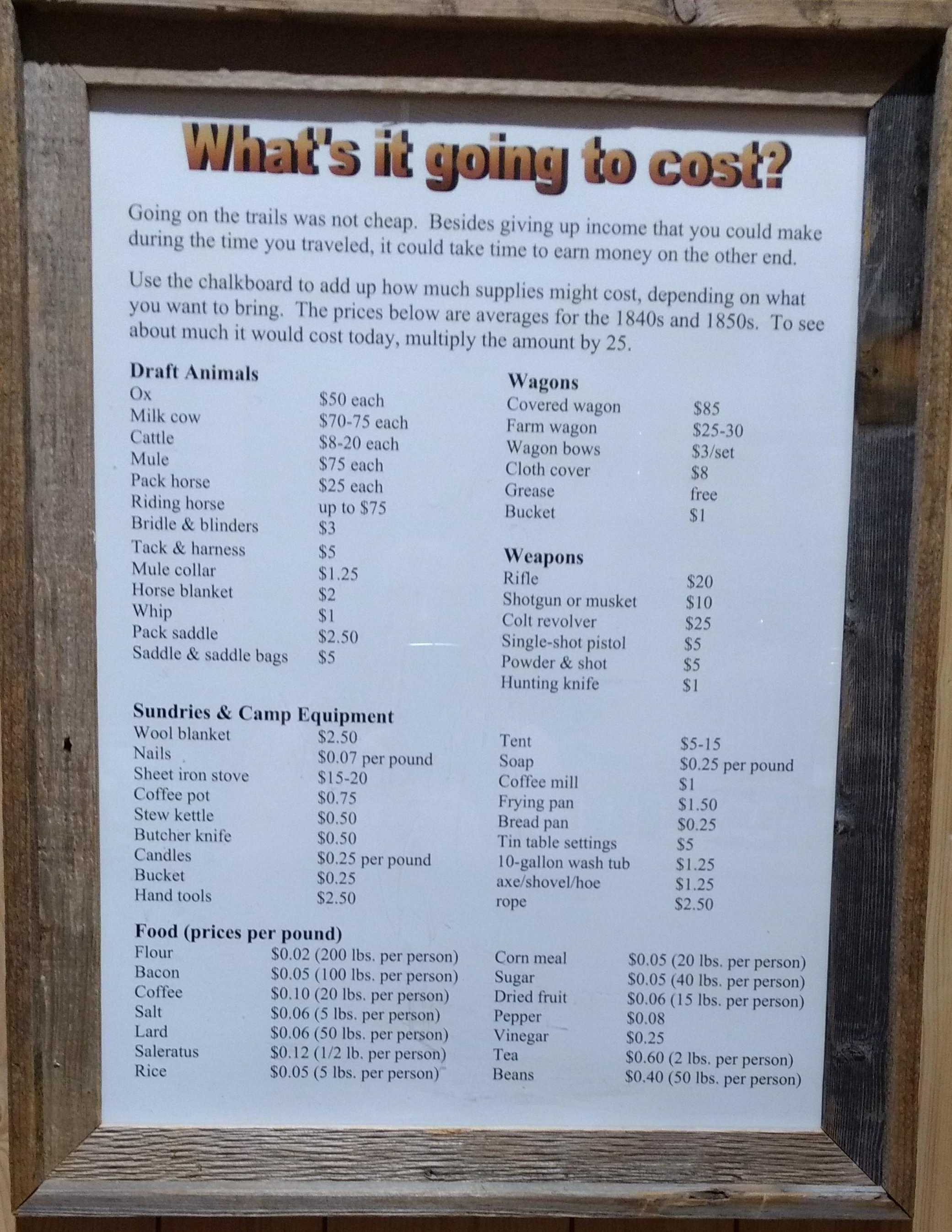
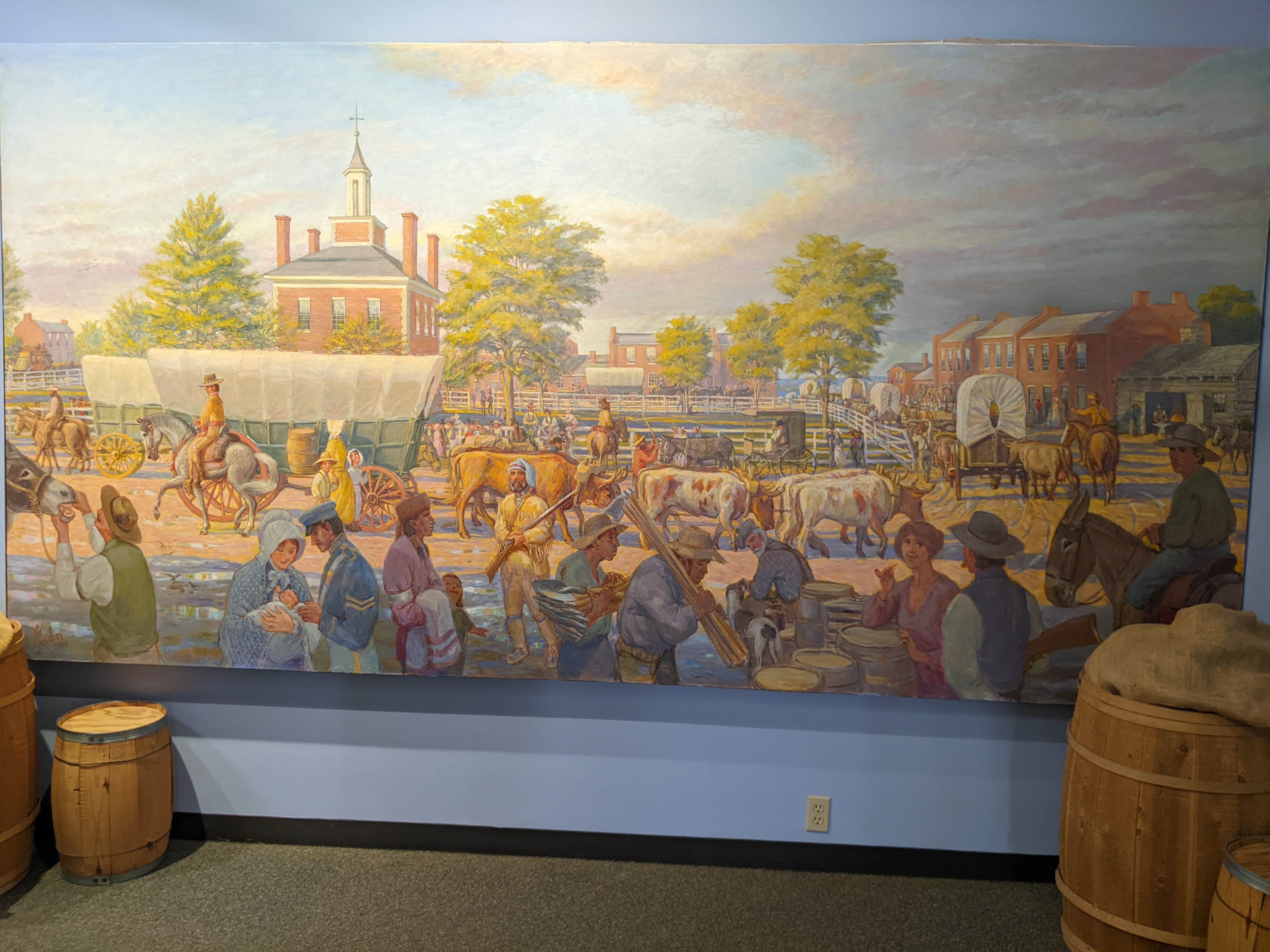
Whether the steamboat landed at the upper or lower landings, the travelers would then trek between 4-7 miles to Independence Square, where they would either buy complete outfits or finish outfitting the wagons they brought with them before camping a couple miles outside of town to wait for the grass to grow enough to start their trip. The town of Independence at that time would have been a bustling hive of activity between all the mercantiles selling food and materials, the blacksmiths selling wagons or repairs, and livestock.
As Francis Parkman described it in 1849:
“Being at leisure one day, I rode over to Independence. The town was crowded. A multitude of shops had sprung up to furnish the emigrants and Santa Fe traders with necessaries for their journey; and there was an incessant hammering and banging from a dozen blacksmiths’ sheds, where the heavy wagons were being repaired, and the horses and oxen shod. The streets were thronged with men, horses, and mules. While I was in the town, a train of emigrant wagons from Illinois passed through, to join the camp on the prairie, and stopped in the principal street. A multitude of healthy children’s faces were peeping out from under the covers of the wagons. Here and there a buxom damsel was seated on horseback, holding over her sunburnt face an old umbrella or a parasol, once gaudy enough but now miserably faded. The men, very sober-looking countrymen, stood about their oxen; and as I passed I noticed three old fellows, who, with their long whips in their hands, were zealously discussing the doctrine of regeneration.”
 Forest Idylls