The full name is actually Macaroni Pudding a la Parisienne, but that is kind of hard to fit in a subject line. Today’s recipe is from the Harvey House cookbook, and let me tell you, for a Harvey House recipe, there is surprising lack of information. Just wait. you’ll see. Don’t forget to watch the short version over on Instagram!
Macaroni Pudding a la Parisienne
The Harvey House Cookbook


I started with a Fricassee sauce, for which, thankfully, the book did have actual measurements. A fairly basic white sauce, this, at least was straightforward. I made a roux, mixed in chicken broth, an egg yolk, cream, lemon juice, sugar, and salt, then set it aside to begin the guesswork on the rest of the recipe.
First, I was instructed to chop some chicken and ham fine. How much, you ask? So did I. Absolutely no indication, so I did my best to guess, assuming I would be using all the Fricassee sauce (since it also didn’t tell me how much of that I would need).


Then I cooked and chopped up macaroni. Also an unspecified amount (spoiler: I didn’t actually need to cook the entire box). I also didn’t fully believe it when the recipe said to cut the macaroni into small pieces – I was like, maybe it came in different sizes back then? Because it is already pretty small…so I just cut it up a little. Having completed the recipe, I’m pretty sure the chef who wrote this was serious and it would have worked better if I had actually followed the instructions and cut it smaller.
Then I mixed it all into the sauce. Well, not all of it. I just mixed until I decided it was probably enough and hoped for the best.

Next, I was told to add egg yolks and beaten whites. Once again, you may ask how many. And how much to beat the egg whites. And once again, I will answer, wouldn’t that be nice to know?? So I did three and just beat the whites until they were foamy before adding them to the strange mixture.

And finally, I was to put all this in a pudding form. I blinked at the page. A pudding form? What did that even mean? Was it supposed to go into a bowl? Should I…wrap it in a towel the way they did puddings on the Oregon Trail? Thank goodness for internet searches! I learned that a pudding form is an actual pan! Yes, there is a pan called a pudding form that was specifically for steamed puddings. And if everyone knew this but me, just pretend you didn’t. Well, I didn’t have a pudding form, but a lot of the pictures looked close to a Bundt pan, so that’s what I decided to use instead. And, miracle of miracles, it all fit perfectly.
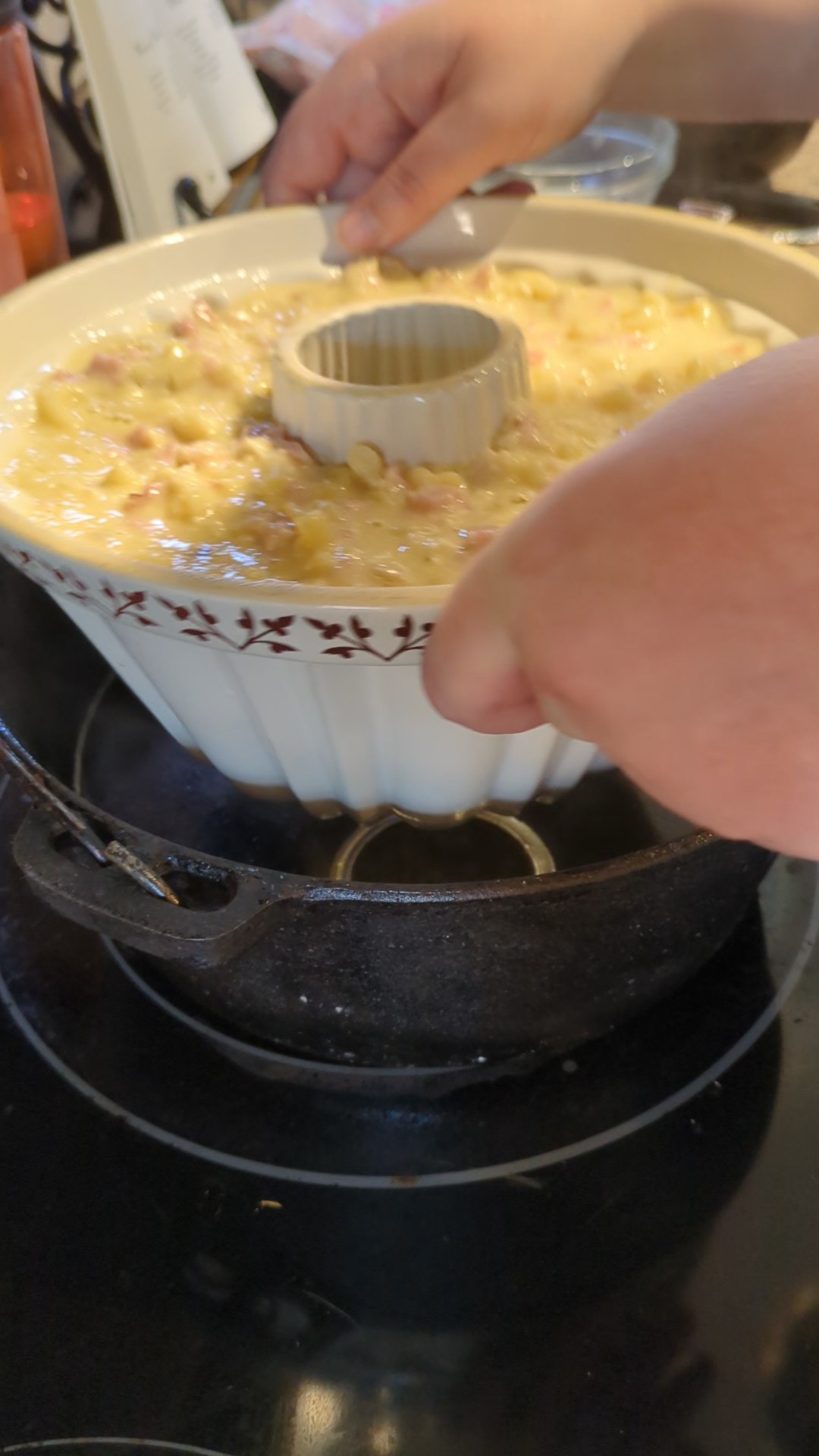
Okay. Now. “…bake it in boiling water…”. Wow. Thanks, Harvey House. So helpful. I figured it had to be similar to how I make Creme Brulee, so, after a couple more internet searches just to make sure, I followed the advice of a very helpful blogger whose name I wish I had written down, and used canning jar rims to support the Bundt pan and allow the boiling water to circulate while it baked. I was also delighted to find that the Bundt pan fit almost perfectly in my cast iron Dutch oven.
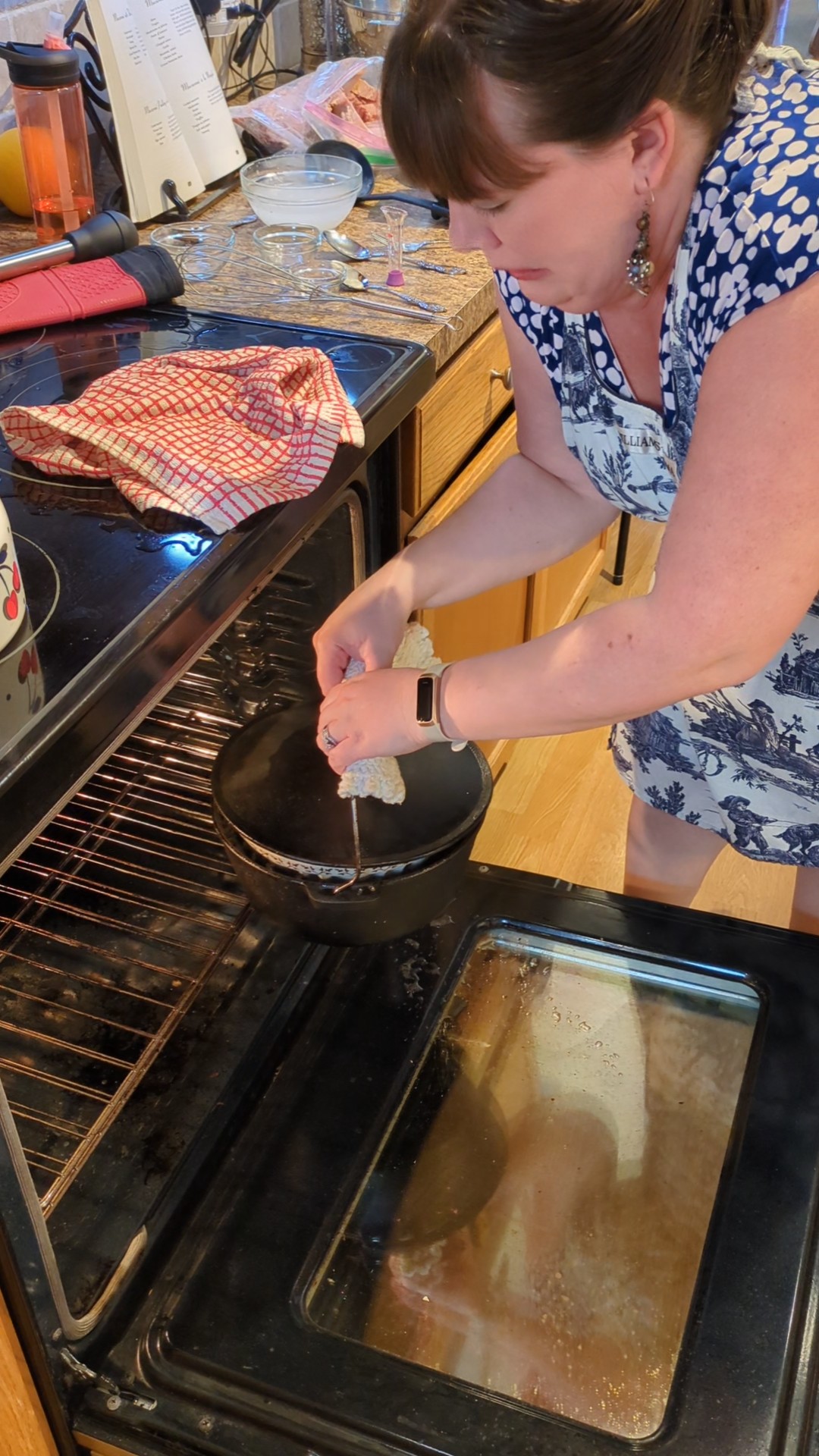
I opted for the standard 350 degrees and to cook it for 30 minutes (it took closer to an hour before I deemed it done). I would like you all to know, though, that a cast iron pan filled with boiling water and a ceramic cake pan is HEAVY. I attempted to get it into the oven, quickly learning why my Creme Brulee recipe recommends I set the pan in and THEN pour in the boiling water. I should definitely have done that. In the end, I had to give up and have Daniel put it in for me before I finished spilling all the water into the oven.
Y’all. I was shocked. That macaroni pudding actually slid nicely out of the pan and mostly held its form. It really did! It didn’t look especially pretty, but I’ll take the win.

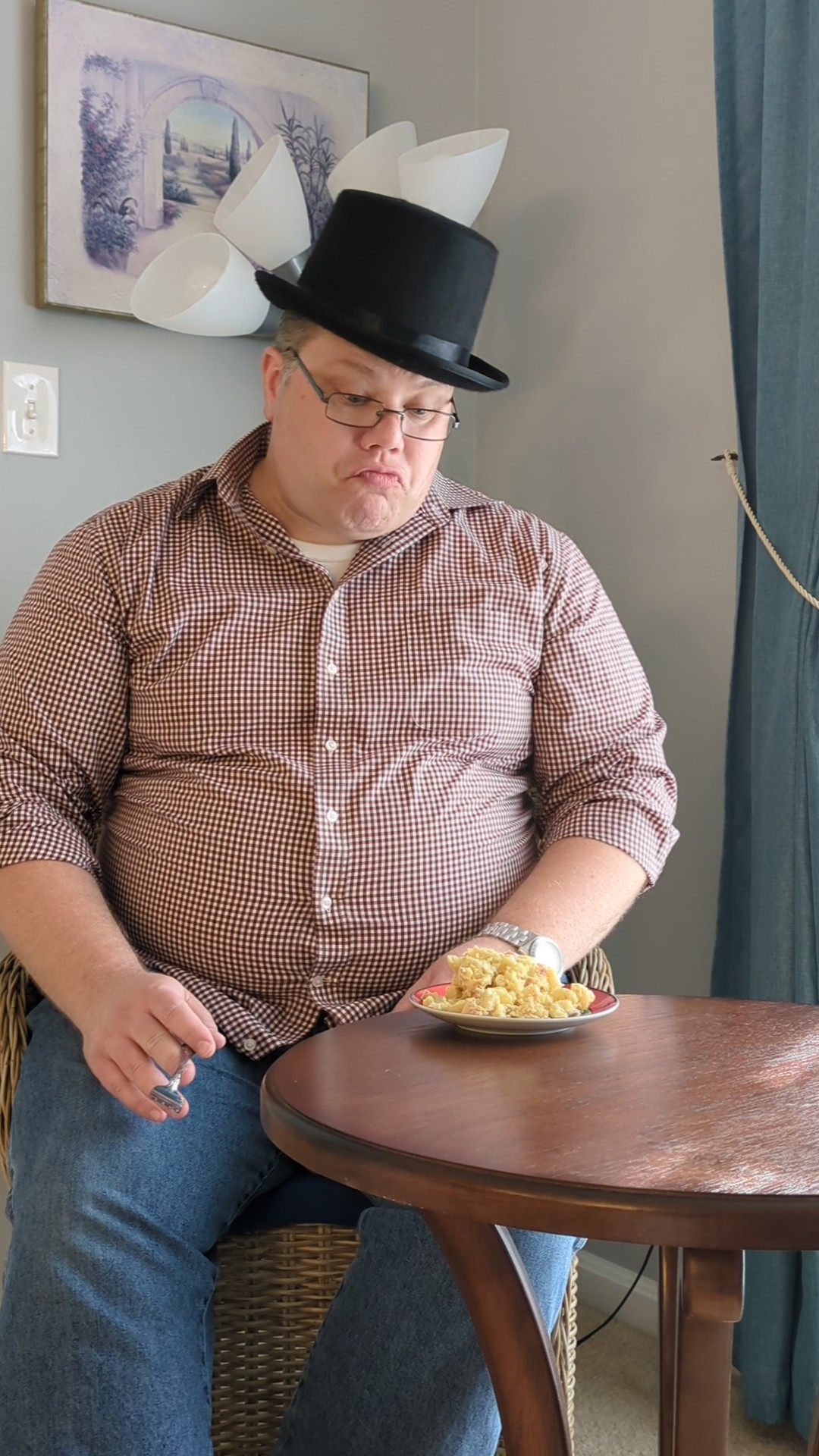
Daniel was more than a little skeptical. And I couldn’t blame him. Because I was too. BUT – it actually tasted pretty good! It just…tasted like a hot dish – or casserole, for non-Midwesterners. It could have used some more seasoning, but other than that, it wasn’t much different. Fascinating.


 Forest Idylls
Great idea to use canning jar lids to support your ‘pudding form’ in the boiling water!
I am used to thinking of pudding as a sweet dessert, as I suppose most people are these days. Since you describe this macaroni pudding as more of a hot dish / casserole, now I’m wondering if puddings years ago were often savory rather than sweet.
Yes, as I understand it, in earlier times puddings were more the way something was cooked rather than a specific sweet dessert. If I understand correctly, it was often considered a pudding if it was boiled or steamed (as this was cooked at least partially by the water steaming around it). The Food Timeline has a really good article on it if you look up Food Timeline and history of puddings!