But wait a second? You promised us Camp Bread!! I know, I know. Don’t freak out. It’s the same thing. I promise! So, this is a recipe in a letter from Narcissa Whitman to her sister in 1836, and I have access to it courtesy of The Oregon Trail Cookbook by Leslie J. Whipple. But the cookbook renamed it Camp Bread, hence the name on my poll. Upon rereading the letter, however, I realized that Narcissa actually called them fried cakes! So, I decided to go with Narcissa’s description. And, on that note, read on for this admittedly short recipe, and don’t forget to watch the short version over on Instagram!
Fried Cakes
A Letter from Narcissa Whitman
Written in 1836

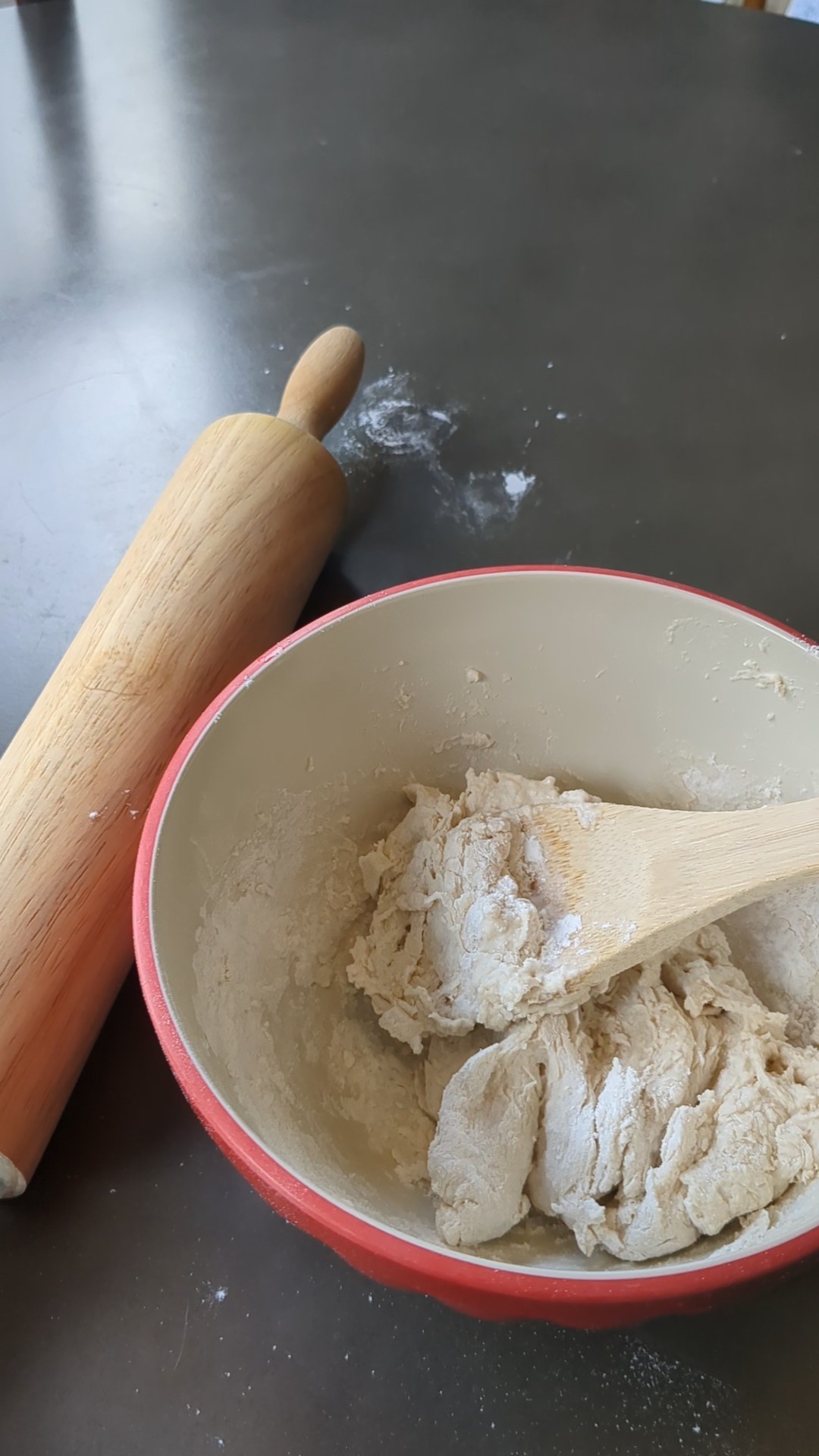
All right. Are you ready for this? Our first instruction, which is part of one sentence, is to mix flour and water together to make dough. Yup. That’s it, folks. I literally just put some flour and water in and mixed it together until I felt like it looked right. Now, I will say that my beautiful white lump of dough is probably not quite what hers looked like. Not only would hers have had speckles in it from bugs flying into it (yes, this was a thing), and likely from having to mix it in unsanitary conditions, but there were a lot of different types of flours back then. Not that there aren’t now, but it was…different in the 19th century. According to Wagon Wheel Kitchens by Jacqueline Williams, common types included:
- Shorts: Also known as unbolted, and a flour that was “a cross between wheat bran and a very coarse whole wheat flour”.
- Graham: Yes, as in the traditional, sort of whole wheat flour used for Graham crackers.
- Middlings: coarse, granular flour that needed more refining.
- Superfine: Closest to what we think of as white flour
Jacqueline indicates that most emigrants likely used middlings as an affordable alternative to the nicer flour. So, envision this dough being…darker, grainier, and with a little more protein!
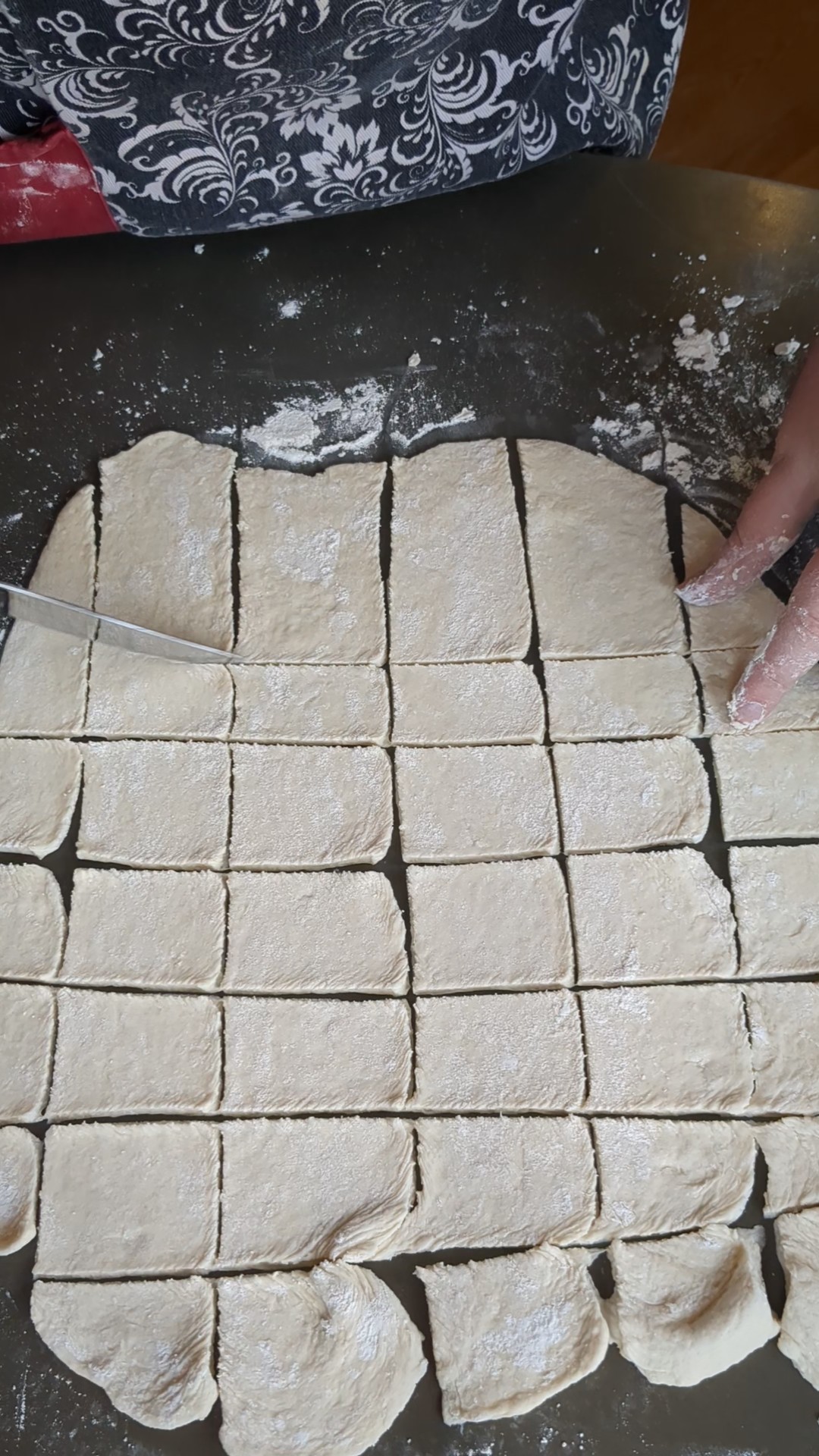
Next, roll it out and cut it into squares. Of course, I made this more difficult on myself by not putting down enough flour, so the whole square shape didn’t exactly stick around.

And, finally, fry it in beef fat. I have nothing but common sense to back this up, but my guess is by beef fat, she means they butchered a cow or buffalo or something and used that fat…well, I would like you all to know that most of us (me included) prefer lean meats these days. And, ironically, buying beef tallow on its own is actually kind of pricey!! I was irritated about that, so I got one of the cheap pounds of ground beef from the store, cooked it, and saved the fat from that (hint: there was a lot of it. Don’t get that for regular cooking, please).
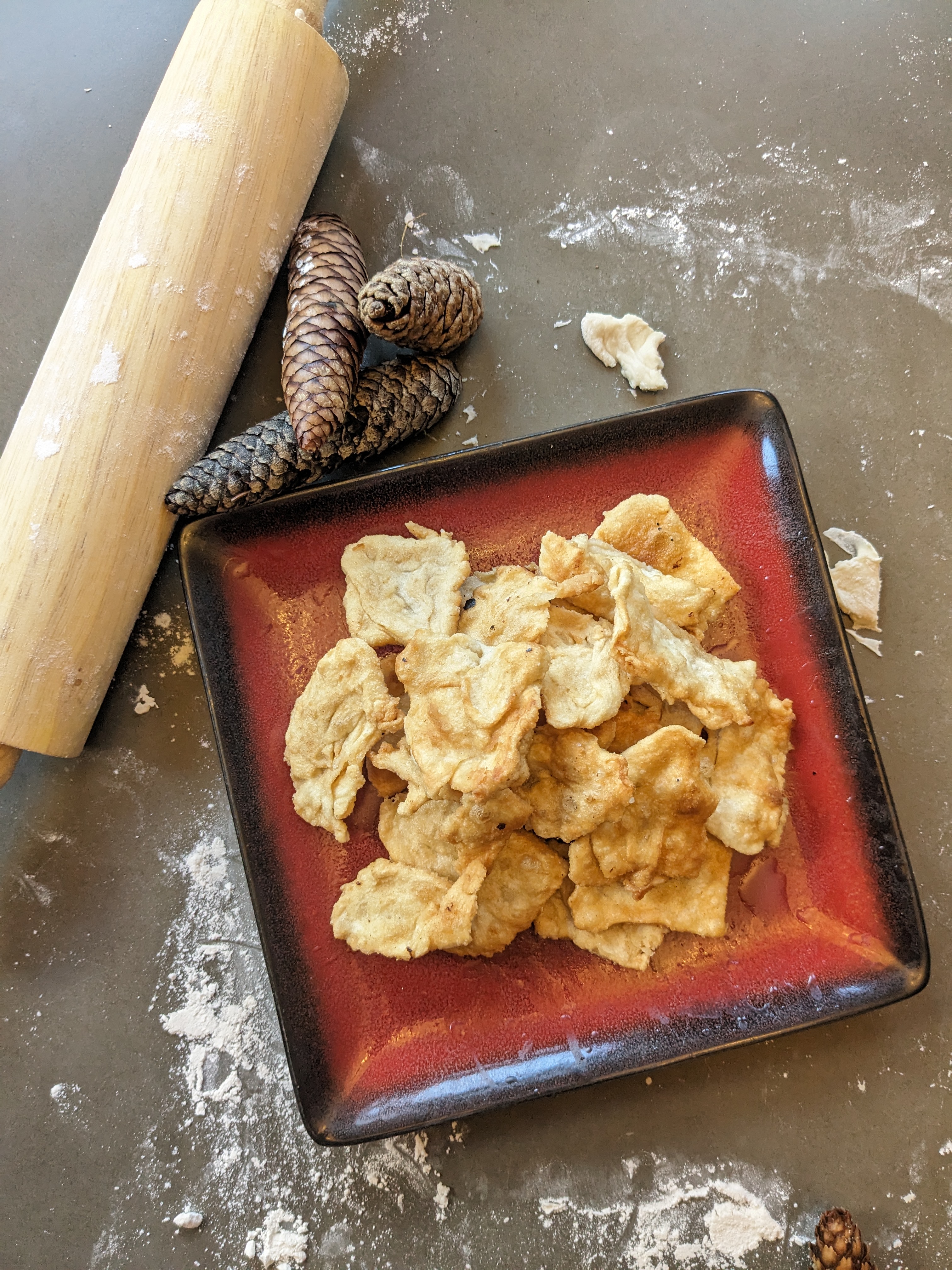
Then I fried that dough in a cast iron pan to be as authentic as possible, since Daniel still won’t let me dig a trench in the back yard, and served it to him!
Ladies and Gents. He took a bite, considered it for a moment and then nodded like it wasn’t half bad. I didn’t believe him, so I tried one – and he was right! It was…actually kind of good. As in, I decided to retake the video shot and had to refill the plate because by the time I checked the video and turned around, he’d polished off the plate I gave him.

The rendered fat actually gave those dough pieces some good flavor, and I can only imagine how much better the flavor would have been had I used quality meat! So, this could actually be a fun experiment to try with your family if you are studying the Oregon Trail anytime soon. You can find it on page 16 of this document (or 18, if you go by their pages instead of the scanned ones).
 Forest Idylls