So what was a typical day like on a wagon train? Well, of course, just like everything in life, it varied depending on the wagon train and master. But IN GENERAL:
Emigrants rose around 4:00 AM and had around an hour to make breakfast (and often extra for lunch), coffee, pack up the wagon, and hitch the oxen (or mules). Then it was walk, walk, walk, possibly cross a river or three, and walk some more.
Sometime around noon, they would break for usually no longer than half an hour for a cold lunch – no time to make a fire and create coals for cooking! – it wasn’t unusual to have leftover breakfast, cold beans, hardtack, etc. Then back on the road.
Finally, before sunset, after hopefully making at least 15 miles, they would circle up the wagons, let the livestock graze, and make dinner. It wasn’t unusual for there to be social gatherings in the evenings and some sources even indicate that there would be one large fire that people gathered at or cooked at. I think this is probably where the most variety was, depending on the people in the train and their preferences. It could also take extra long to find a place to circle up because, especially later in the trail, the emigrants sometimes had to go miles out of their way to find enough grass for the livestock to eat.
I will say that if neighboring wagon got their fire going, one might borrow fire to start your own because starting it could be difficult, considering how unreliable matches were. Emigrants would sometimes even have to resort to sprinkling gunpowder on their fires to get them to light!
Now, if the train was running behind, due to getting stuck in the mud, rain, bad weather, illness, etc., then the carefully ordered schedule might also have to change to make up for lost time, leading to even less time to prep food or rest.
You will notice that I do not have a Resource section below for once…that is because, I’ll be honest, this entire post came from memory based on my research over the past several years, so if there are any mistakes, I take full responsibility!
I am, however, sharing a photo below of an example schedule taken at the National Historic Trails Interpretive Center (an awesome museum to visit) that demonstrates what I mean when I said it can vary wagon to wagon. You’ll note that the times and details there are slightly different from the ones I gave.

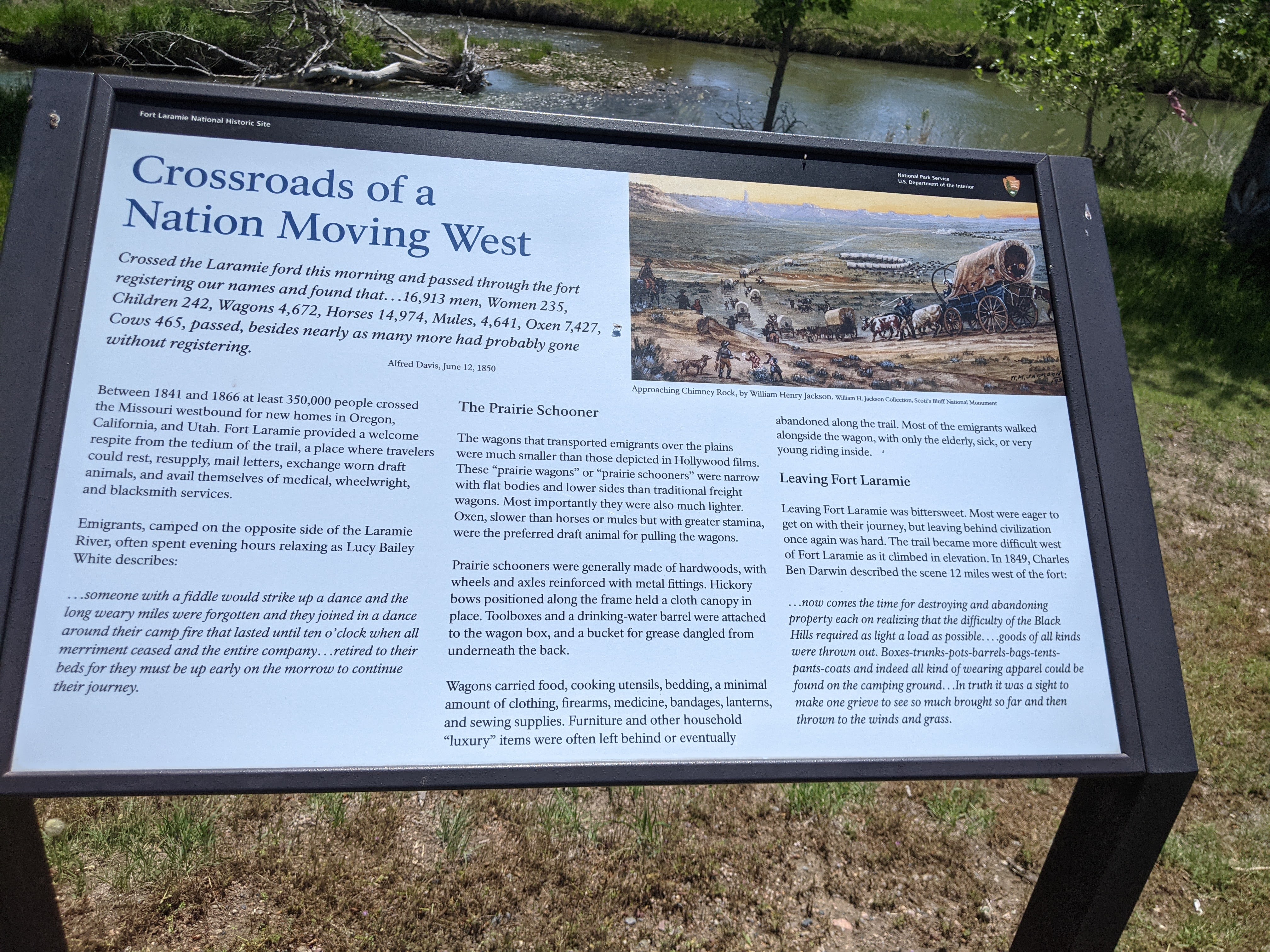
And below is another sign talking about those evening revelries I mentioned!
 Forest Idylls