Today we’re cooking from The Virginia Housewife, published in 1824, and, though one of our shorter recipes, it still had its hiccups. As always, don’t forget to head over to Instagram for the fast version, and many thanks to my sister, Tianna, for her videographer skills (seriously – I made the last couple without her, and it was sooo much harder!).
Omelette Souffle
The Virginia Housewife


The recipe starts us out by telling us to break some eggs and separate the “yelks” and whites – and no, that’s not a misspelling. It really used to be yelk instead of yolk. Then we are to beat them separately until “light”. I decided to make the assumption, having made souffles before, that this likely meant at least the whites should be beaten until soft peaks form. It went surprisingly fast, even with a hand beater.
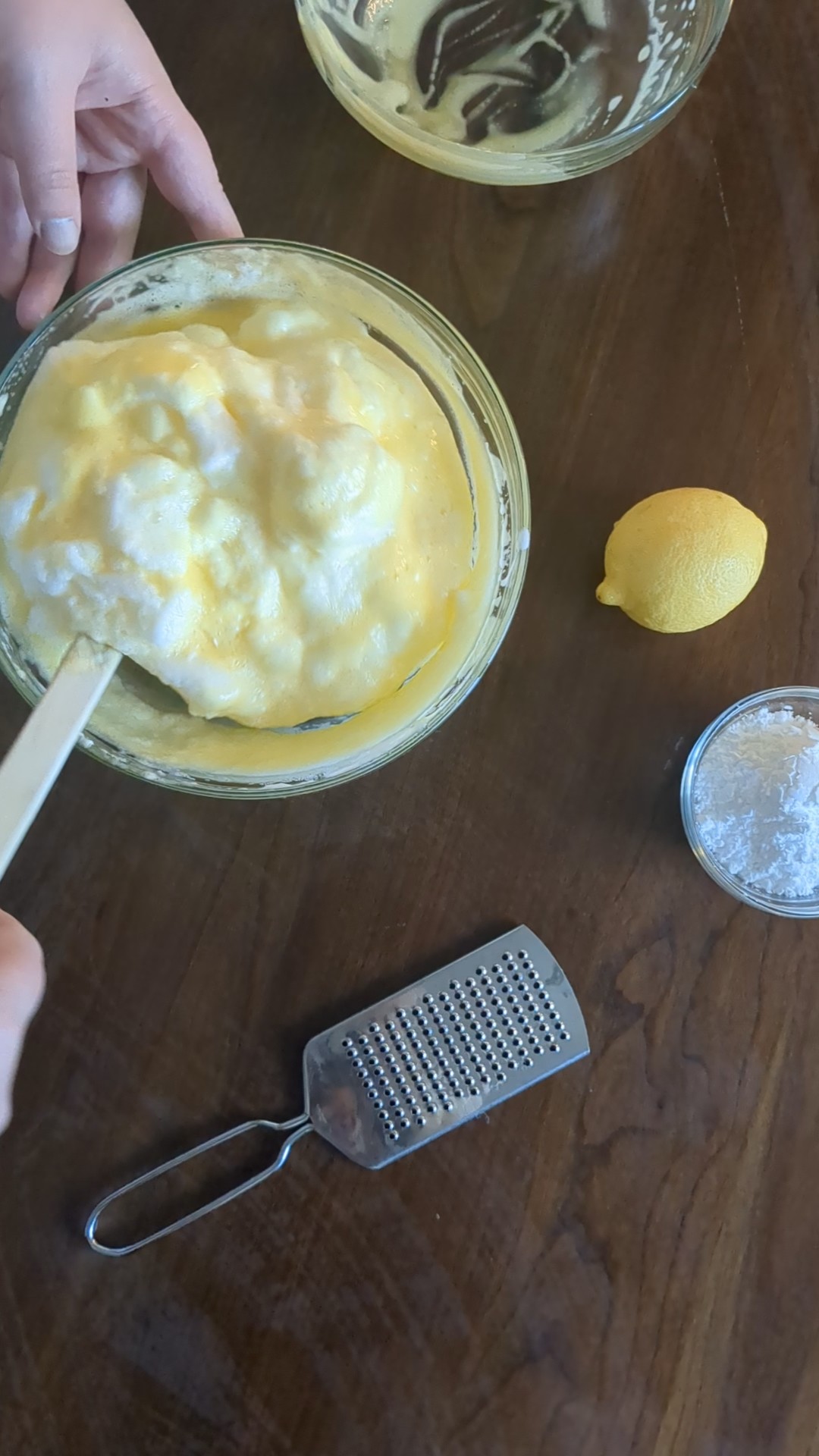
Then I was supposed to mix the two together. I thought about this probably far longer than I needed to, because it simply says mix – and what is the point of just mixing them if we beat them separately? So I again made an assumption that they probably meant to fold them together, and if they didn’t, well, it would be better folded anyway. After that, I added powered sugar – yes, seriously – and lemon rind and folded those in too.
Next was melting a quarter pound of butter in a pan. An entire quarter pound! But I obeyed, and then hesitated over the instructions to pour the eggs in and stir until they absorbed the butter. Did that mean that they were to be cooked through? Or just until I couldn’t see butter anymore? If I was supposed to have just mixed them anyway and not folded them, did the texture affect how the butter would be absorbed? It didn’t really say anything about cooking them further after that (as you will see), so should I make sure they cooked through along with the butter? I finally just poured the eggs in and stirred – gently – and it took a surprising length of time for the butter to absorb into the eggs. By the time I didn’t see any of the melted butter, there were some portions of the eggs that were cooked and others that weren’t, so I decided that was probably what the recipe wanted, and moved on.

Now here was an interesting part. I was supposed to put the eggs on a plate, and then set that plate in a hot Dutch oven and serve after it was a little brown. What kind of plate fits into a Dutch oven? Especially one large enough to hold this amount of eggs? And after I set the plate in the Dutch oven, was I supposed to put it on the stovetop? Cover it? Put it in the oven? It said nothing about actually keeping it on the fire or cooking it. Just to set it in the hot Dutch oven and, when a little brown, serve it! Well, either way, I definitely didn’t have a plate small enough for my Dutch oven – so I poured it into a cake pan instead (maybe she meant a pie plate? Not a regular plate? I would still like to know and my google searches turned up nothing).
I preheated my cast iron Dutch oven and its lid in the stove, set the cake pan in it and…waited. Because if it was supposed to go on a heat source of any type, it would have said so, right? After like ten minutes, I peaked and there was certainly no browning. So I changed my mind and put it in the oven with the lid on. A few more minutes, and I changed my mind again and took it back out. Then I took the lid off and stuck it back in the oven. Somehow, miraculously, despite all my mind changes, it did eventually brown, and beautifully so.


Then, possibly the strangest part of the recipe, were the instructions to serve it as a dessert. I mean, I know she had us put sugar in it – but an omelette souffle for dessert? Really? And yet, after we tasted it…yes. Yes, it could have been served as a dessert. Somehow the perfect balance of sweet, fluffy deliciousness, I could totally see it being served as a dessert if the culture were a little different (in other words, if we weren’t quite so programmed to have eggs as breakfast). Not going to lie, Daniel and I totally polished it off the next morning, and I still think about it sometimes.

 Forest Idylls