Welcome to a special edition episode of Dinner at 1800: On The Trail! Today, we are going to borrow my friend’s fire pit out in the country and attempt to cook cornbread just as they did on the trail.
Leslie J. Whipple’s The Oregon Trail Cookbook is a compilation of recipes mostly used on the trail and adapted for modern day users, so I’m going to take Nana’s Cornbread recipe, the instructions for Dutch Oven cooking on the next page, and combine them.
First things first – I had my husband and his friend build a fire to start making coals while I changed to look the part. Yup, ladies and gentlemen – I put on my pioneer dress. Hey, if they had to work in dresses like this, I will as well!
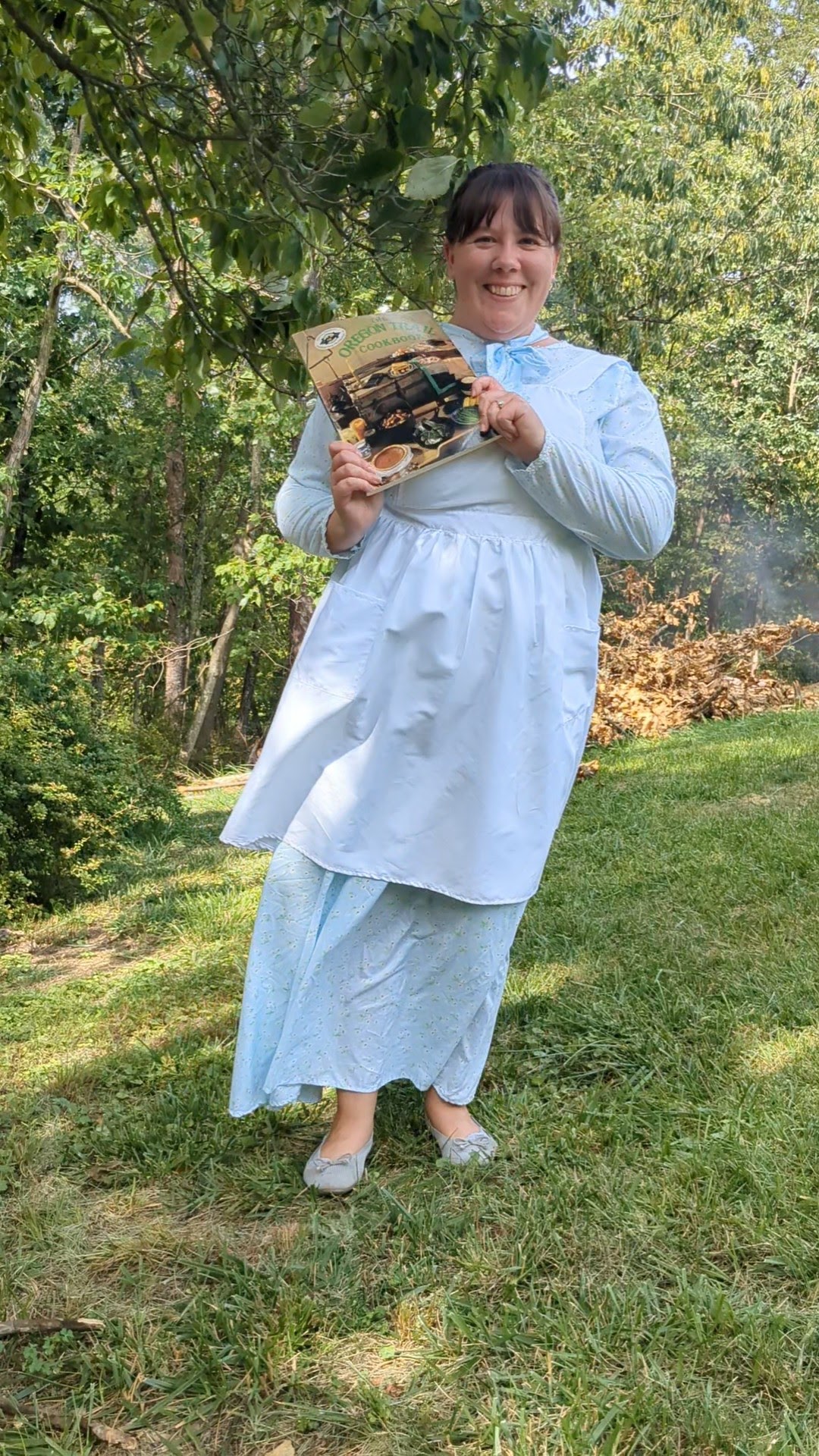

Setting up a spot on a couple of tree trunks and balancing my cookbook on a log, I got to experience the emigrants’ first difficulties. No wonder one of the diaries mentioned with delight a wagon with a shelf that could be let down for food preparation!
But for now, I’ll mix together sugar and lard – technically, the recipe called for shortening, but since it wasn’t invented until 1910, I went with the more authentic lard – and then added two eggs. My friends have their own chickens, so I felt very authentic with my brown eggs…despite having to scrape out a bit of blood. Gross.

Moving on, the recipe wants me to dissolve the baking soda into the buttermilk, but I’m pretty sure the emigrants wouldn’t have bothered with such nuance so I just threw it all in.
You know what else was fun? All the flying insects suddenly interested in this food smell. There were, in fact, diary entries that mentioned eating food black with mosquitoes or other insects and if I hadn’t had access to things like extra towels to wrap the bowl while I worked on the next part, I’m pretty sure I would have gotten to experience that part authentically as well. As much as I want to be accurate, I don’t want to be that accurate.
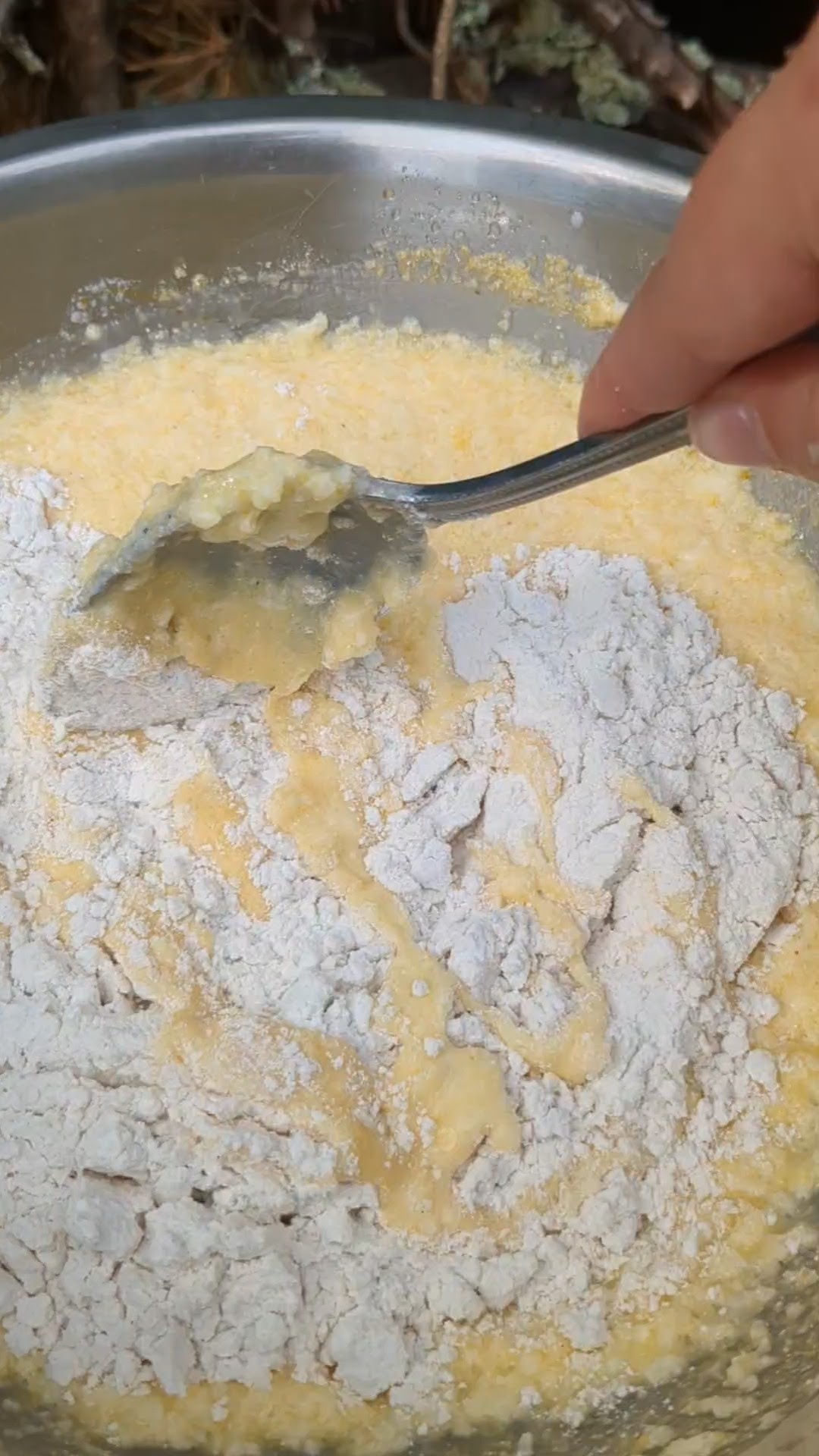
So with that wrapped securely in a separate bowl, I mixed the cornmeal, baking powder, and salt in another bowl, poured it into the (still bug free!) liquid mixture, added flour, and mixed it all together.
By the way, did I mention it was like 100 degrees out? Okay, maybe 90. But one thing that isn’t complained about enough in diaries is the combination of long sleeved dresses, hot fires, and mixing up batter in a hot weather. **makes note to add into book**

Okay, with the batter ready and secured against flying invaders, time to check on the coals. The guys were quite thorough… and took advantage of my need of a fire to burn fallen trees and brush, which meant the giant flames had to be taken down a notch before we could get close enough to pull out some coals for use. But when that was finally done, we set the cast iron Dutch Oven and lid into the coals to get them nice and hot.
I have no idea if this is how they did it or not, but I threw drops of water in it and once it sizzled, figured it was hot enough, and moved forward. I made a fresh bed of coals, moved the Dutch oven onto it, and dropped some lard in to grease the pot (not that it said to do that – but it seemed like common sense).
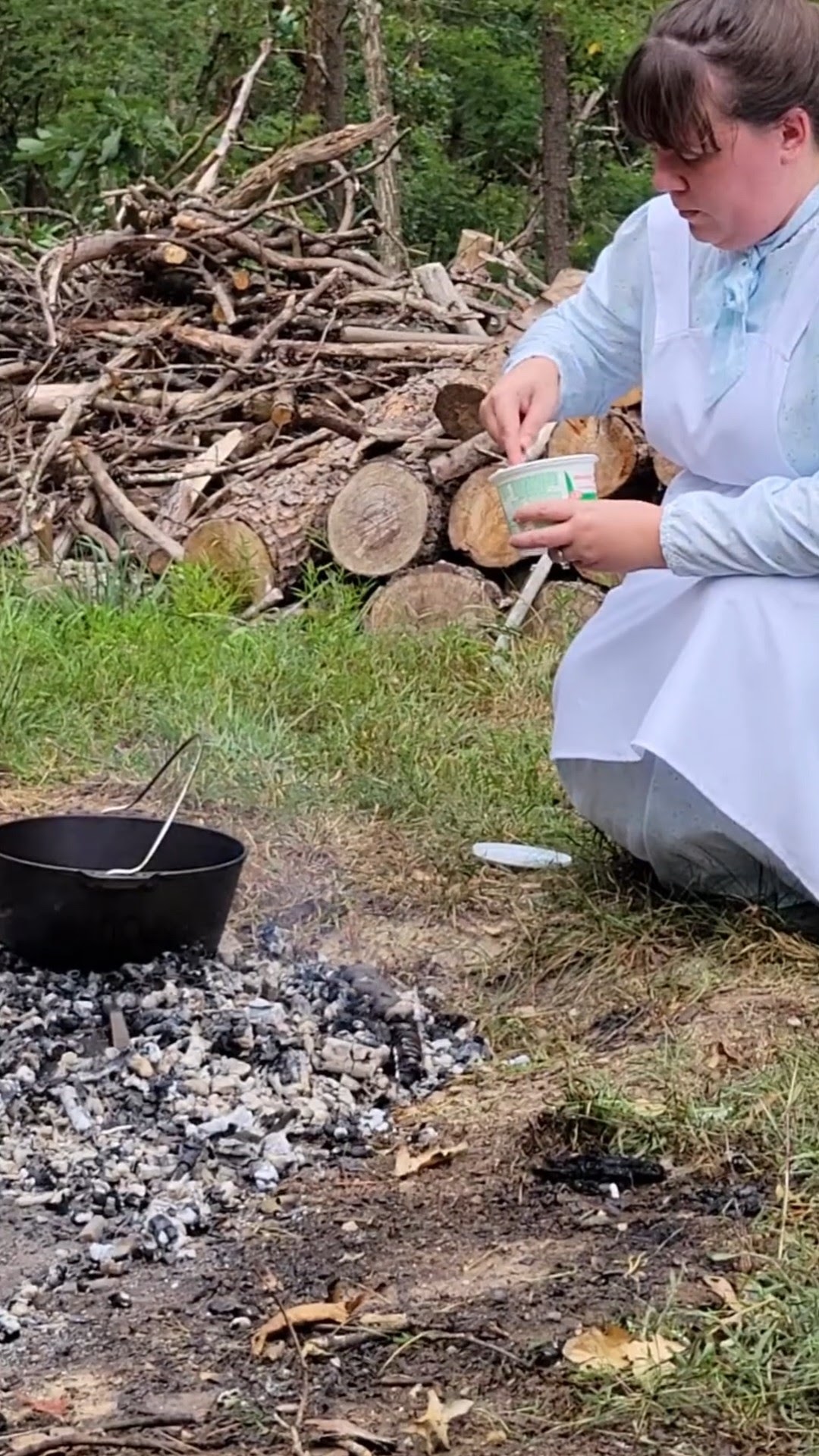
Now, I state all that like it was a simple act. But the fact is, have you ever lifted a hot cast iron pot from coals?? There was no way I was getting close enough to that heat to reach it without getting burned, and certainly no way I was going to chance lifting it with a dish towel, which must be similar to what they used, right? I have so many unanswered questions now. So instead, we got a nice long stick and, having to exercise an embarrassing amount of strength, I finally got it moved, and managed to get close enough to dump the lard in for a brief minute before I escaped to breathe.
I moved in again long enough to pour the batter into the pot and again used the stick to try and even out the pot so all the batter didn’t shift to one side. Then we scraped coals off the lid and, after a couple tries, managed to place it on top of the pot, still using the stick (seriously, what did they use to lift the hot, pre-heated lid? Why isn’t this mentioned in diaries??) But once we finally got it on, we piled coals on top and around the pot and left it to cook.
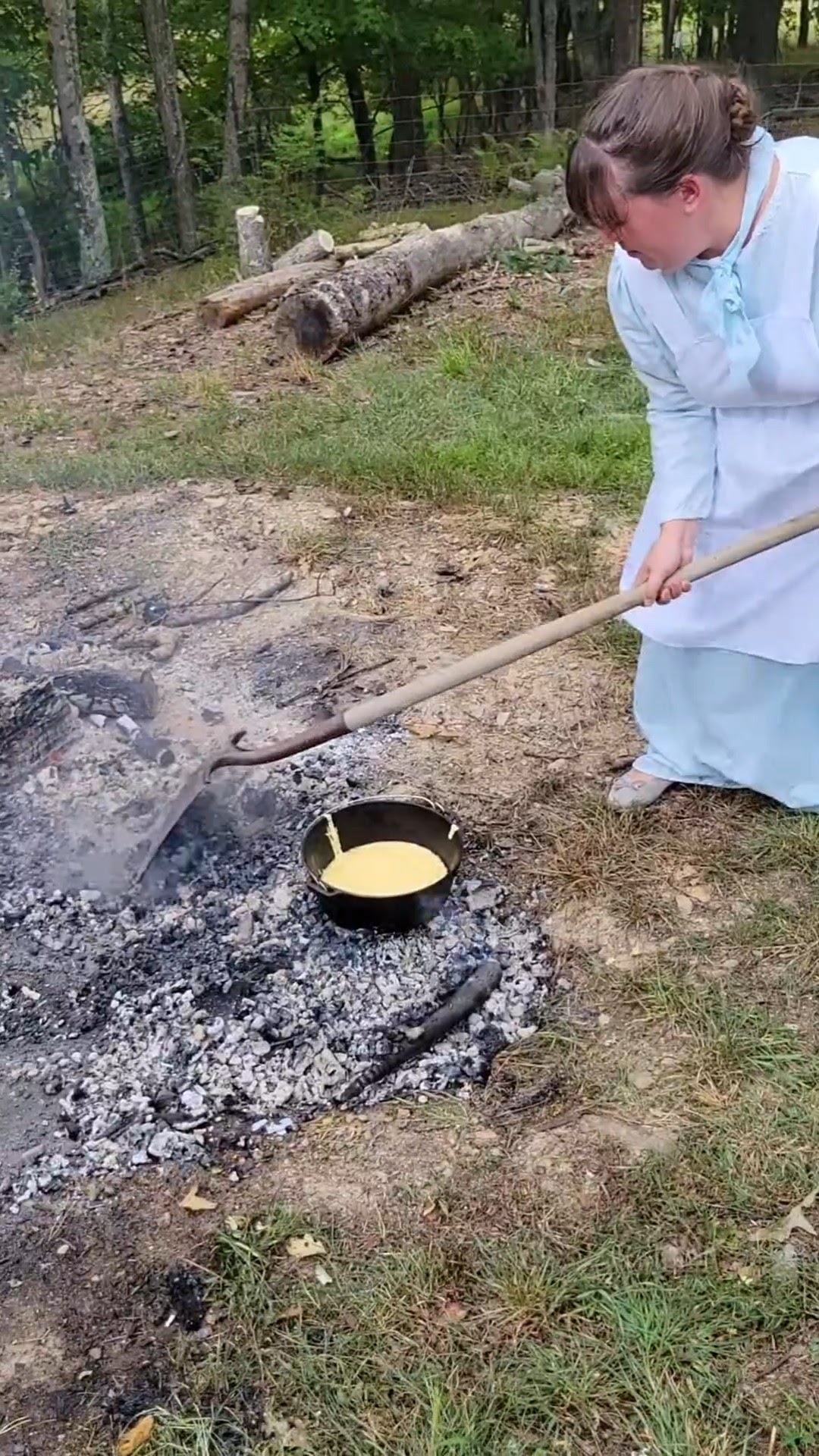


The recipe said to bake the cornbread for 20 minutes, but with how hot the coals were, we decided to check after like 8 minutes. And it was gorgeous! A beautiful, light golden brown. But despite my best efforts, it had tilted and one side was higher than the other and therefore still not cooked through. So back on the lid went, I turned it to try to keep the done side as much off the coals as possible and piled the coals back on.
About five minutes later, it was solidly baked, and maybe was a tiny bit black in parts…but still looked beautiful to me!
Daniel was thoroughly impressed – by both how it turned out and the taste. Though perhaps less so by the hat I made him wear…

Now, don’t forget to head over to Instagram to watch the one minute version of this recipe, along with a behind-the-scenes shot of my friend’s one-year-old trying it!
 Forest Idylls
It looks like a lot of fun and very tasty! Since I love corn bread, I’m wondering about butter and honey. Imagine churning butter on the trail and finding a bee tree to raid before you baked the cornbread!
Mmm, that would be delicious! If it was early enough in the trail, there is a greater likelihood of them having butter, assuming the cows were still producing! I can’t say I remember seeing any entries mentioning honey…but I certainly haven’t read them all, and I don’t see why it couldn’t have happened! That would be pretty amazing.