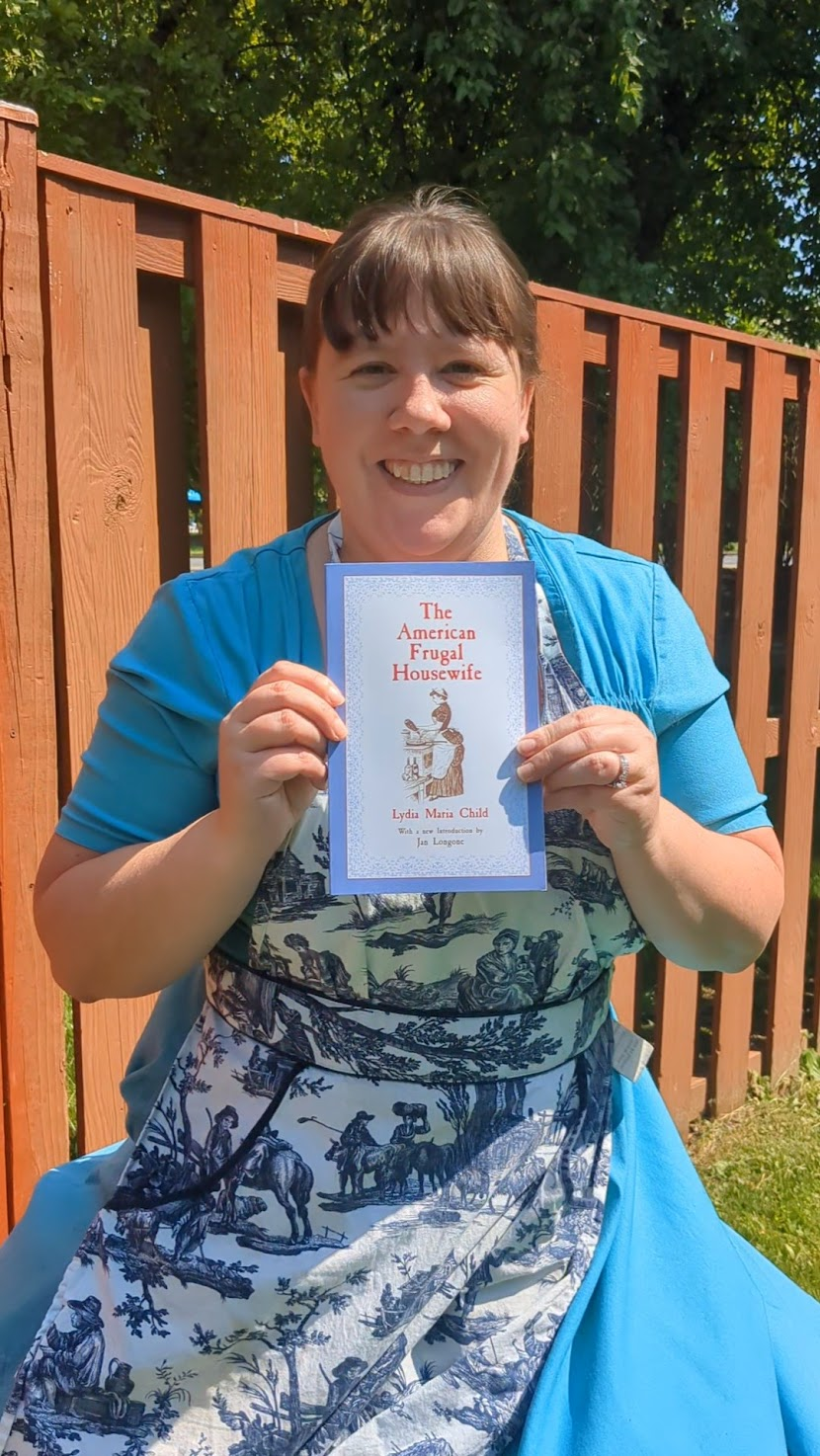
And we’re back! This time with a recipe from The American Frugal Housewife by Lydia Maria Child published in 1832. And this one was fascinating. And also kind of long, so feel free to jump over to Instagram for the 45 second version!
As always, many thanks to my sister Tianna for recording my experiment!
Alamode Beef
The American Frugal Housewife

First – tie up a round of beef. Now, I’ve had lots of recipes tell me to tie my roasts, etc., before…but I admit it took this recipe to finally force me to actually buy cooking string. So, for the first time ever, I listened to the instructions, and tied the beef. Simple enough, if you don’t overthink how many strings you should use…
And then…here it comes again. The lack of measurements. “Make a stuffing of”…and then it lists the ingredients. No measurements whatsoever! First is grated bread…simple enough. Breadcrumbs. Of course, as the main ingredient, a lot should probably go in, right? (spoiler alert, not right)
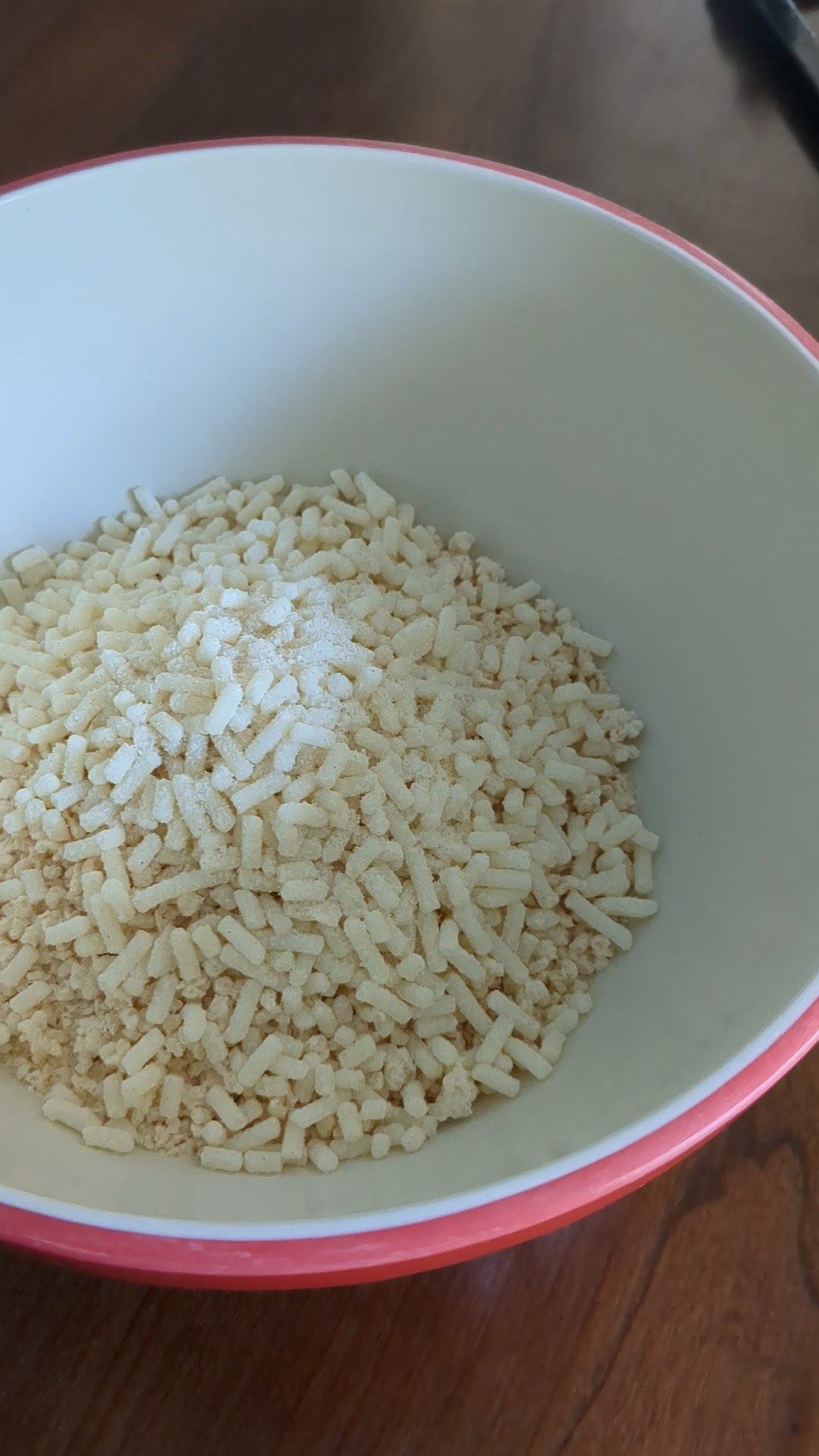
Then suet. Wait. suet? Isn’t that the weird stuff they made with animal fat? Yes, yes it is. I was able to order some vegetable suet on Amazon. They called it shredded suet and it came in little pellets. I admit I did stare at it awhile, trying to decipher whether I was supposed to just dump some in or actually do something with it first. Like, should I melt it? Or did it always look dry like this? I opted for just pouring some in. (spoiler alert: I should have tried melting it, I’m pretty sure. At least, I assume it would have melted…)
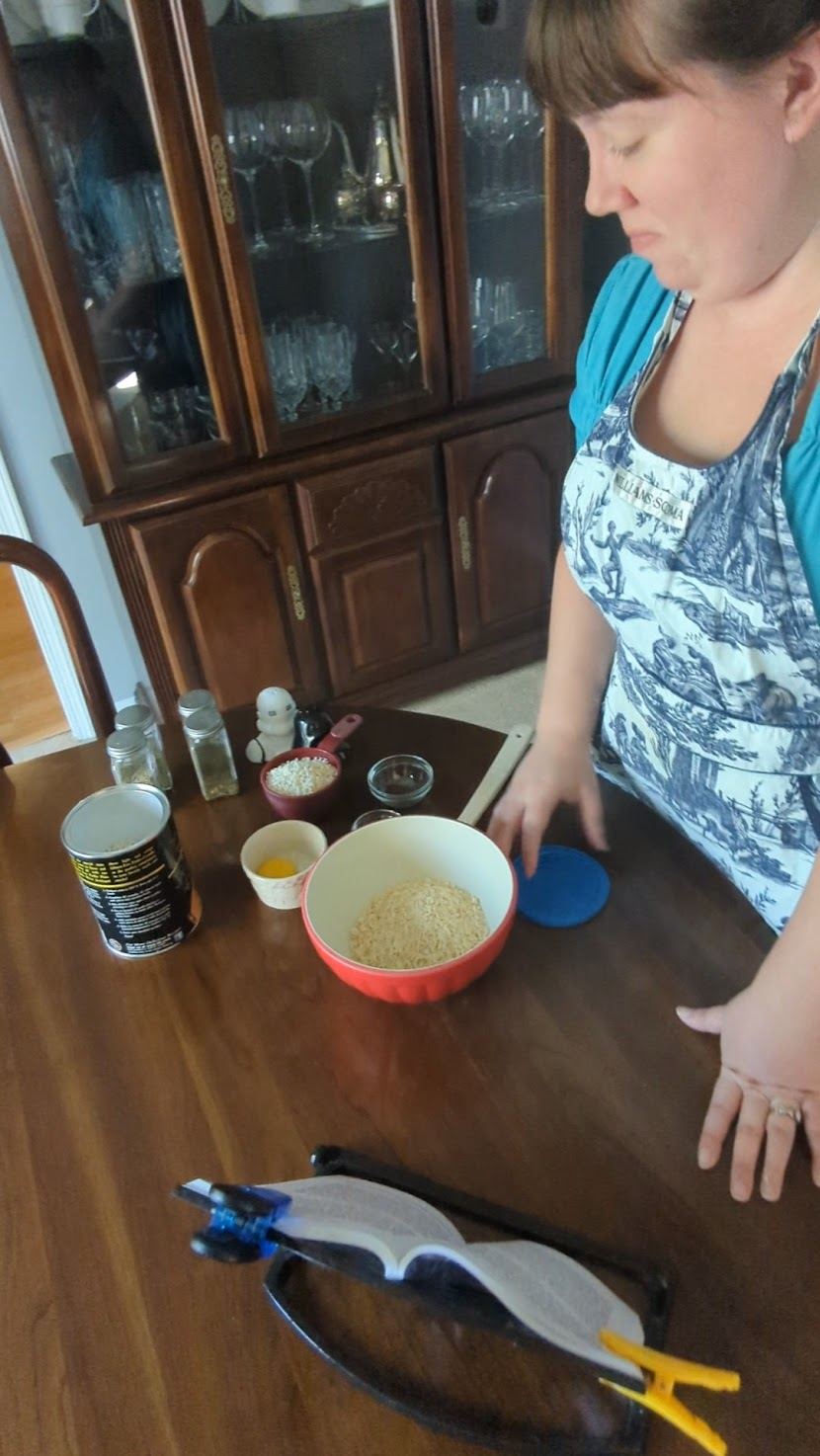
Next, sweet herbs. Yes! Another simple item! Until I realized she didn’t actually say what sweet herbs. What did she count as sweet herbs? And how many? How much? Ugh. After many google searches that were less than helpful because they kept trying to suggest things like apple mint and stevia, which I was pretty sure wouldn’t go in a stuffing, I finally picked basil, rosemary, tarragon, and sage, partially based on another recipe that actually clarified tarragon or sage when she said sweet herbs. I also threw in some salt and pepper just because.
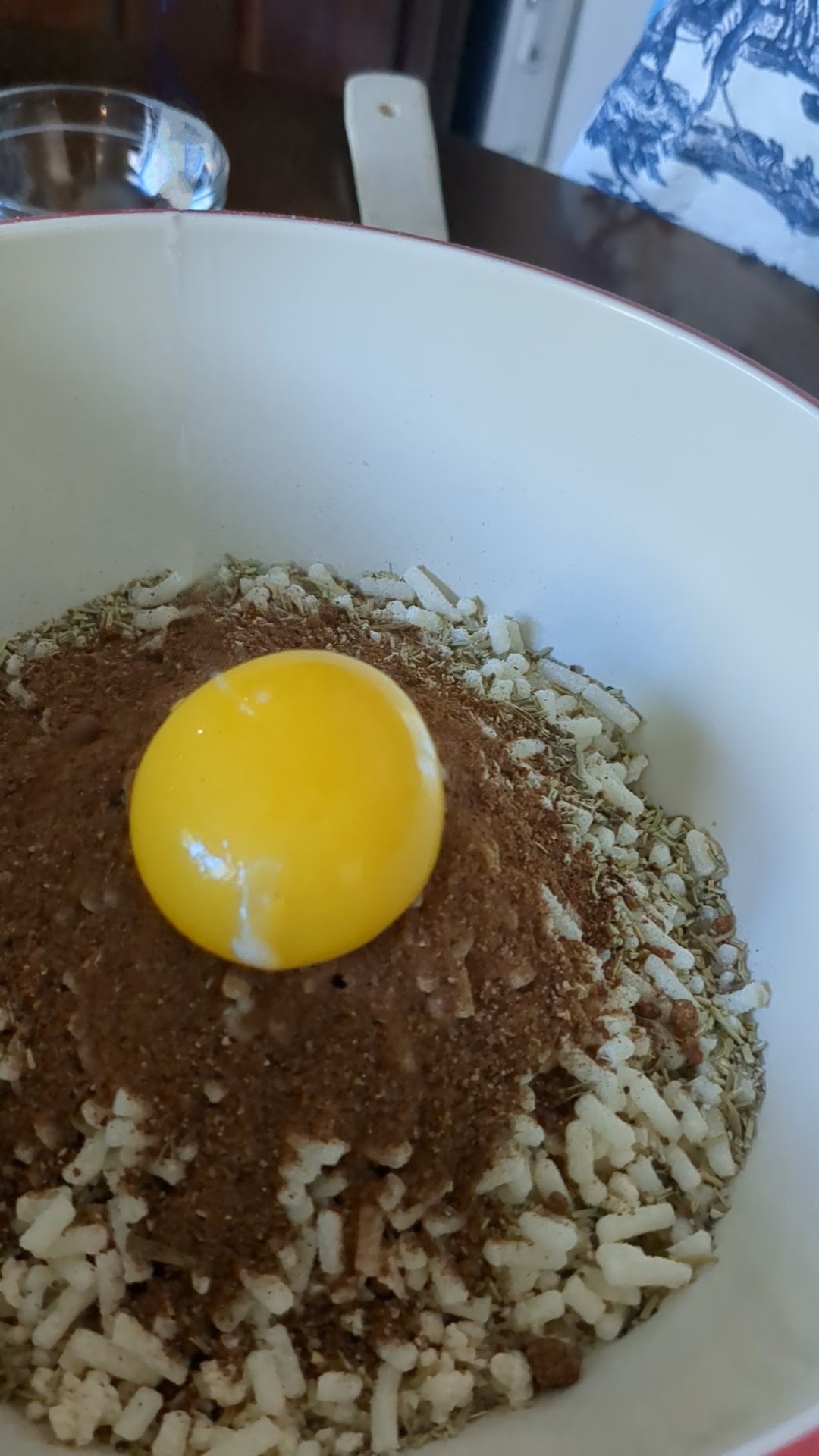
Then came nutmeg (finally, a real ingredient!), and a few cloves pounded. I would like you to know, it took a few tries of switching terms around to convince google I was NOT looking to pound garlic cloves, and finally settled on about a teaspoon of clove.
Add the yolk of an egg. This is when I realized I might have made a mistake in not melting the suet first. Because one egg yolk was definitely not interested in turning all those ingredients into the consistency of stuffing.
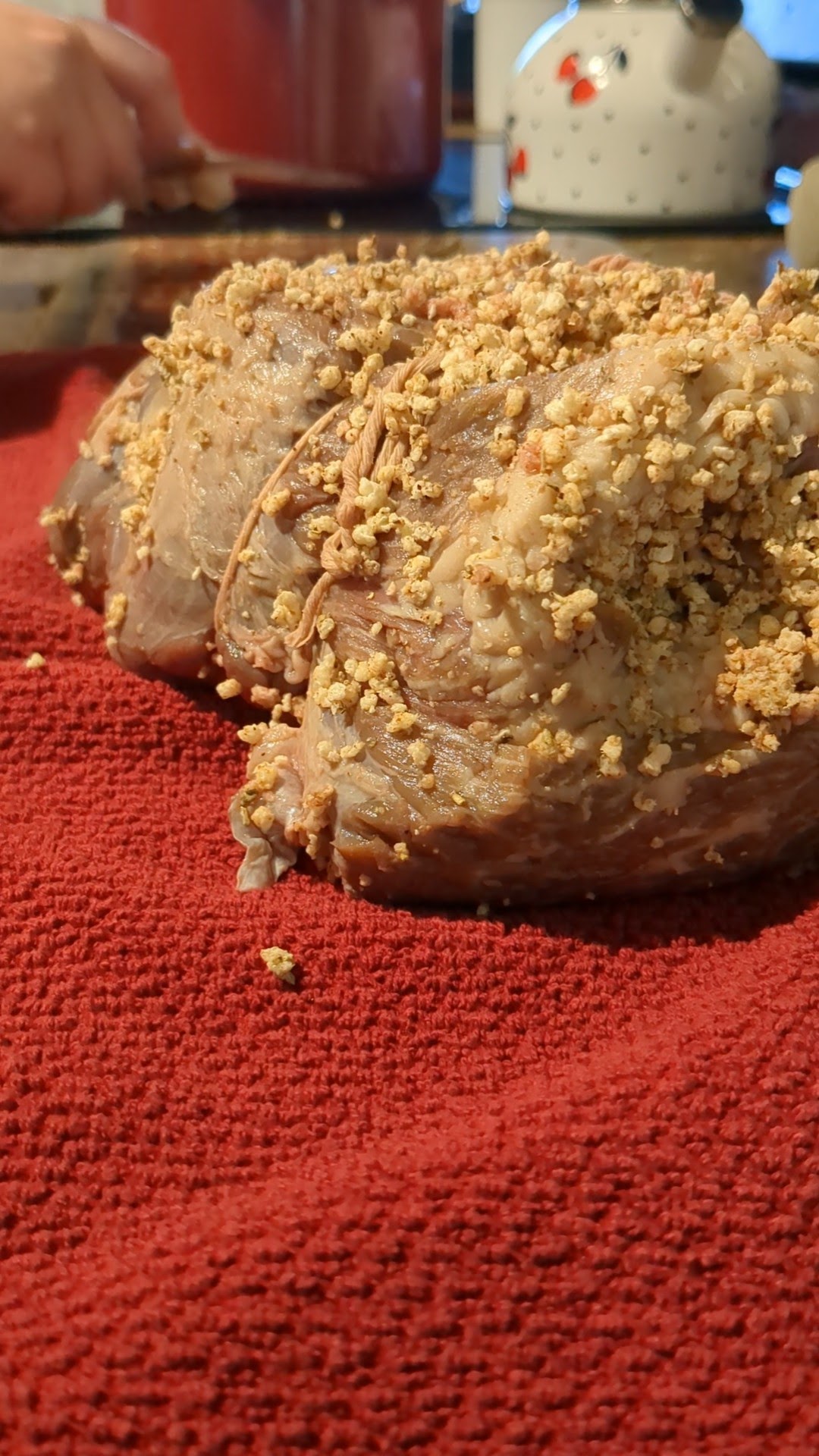
Nonetheless, I gamely cut holes in the beef and did my utmost to shove the stuffing into it. I’m pretty sure about a quarter of it just fell to the counter, but, hey, it looked pretty stuffed to me when I finished!
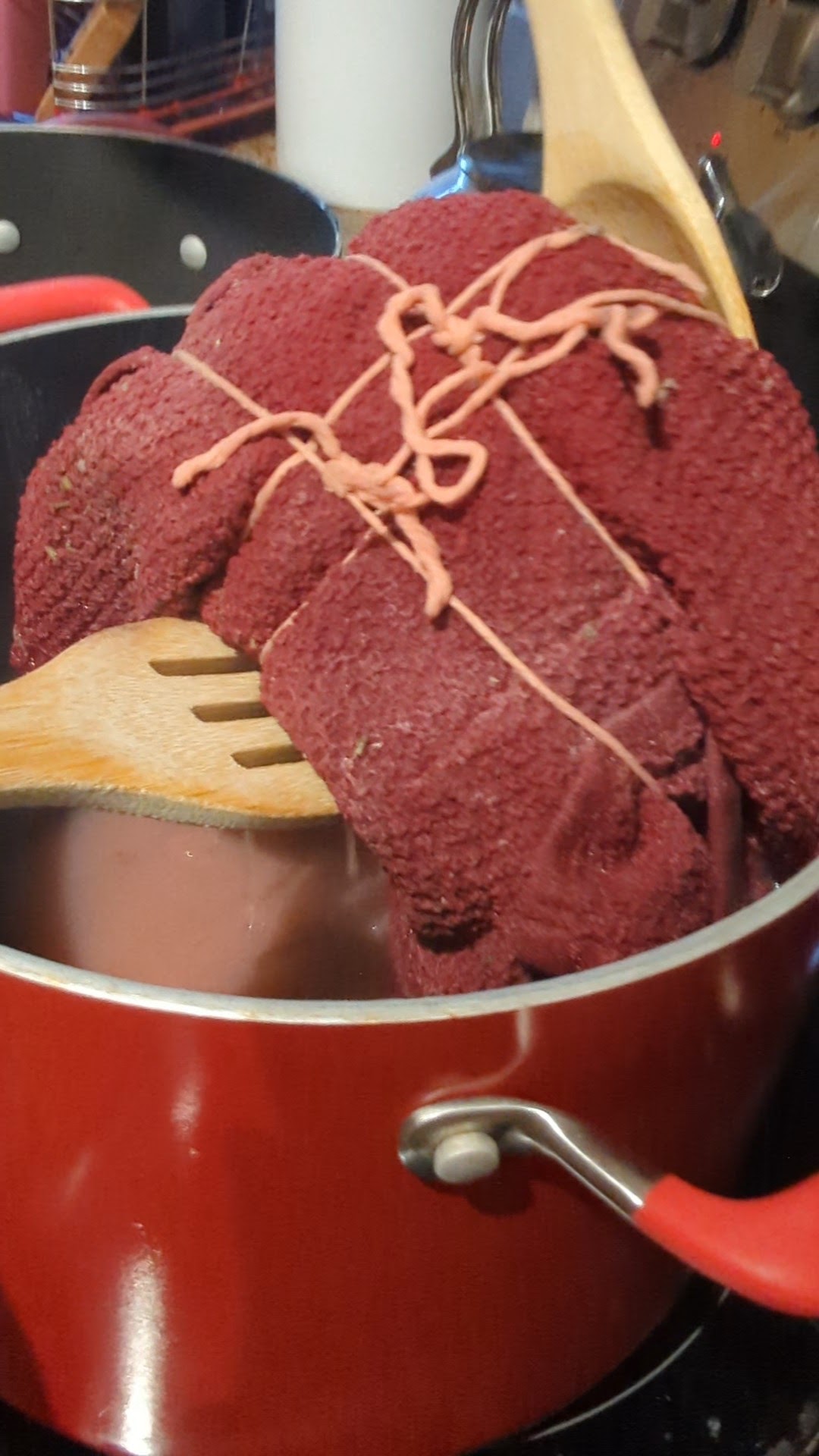
Then tie up the beef in a towel, cover it in water and let it boil. I’m here now to tell you…when someone tells you to boil something in a towel, do not choose a red towel, no matter how many years you’ve had it and think the color has been washed out. Yup. But I, clear-thinking I, decided on red because it matched the color of beef and was therefore less likely to stain. Yes. You may roll your eyes. That beef was boiled for an hour and a half, turned over and boiled another hour and a half, and I may tell you that when I took it out, there was no way on God’s green earth I was going to use that bright pink liquid to do the next step. Nope. Down the drain it went. I was actually a little nervous about how much must have seeped into the beef as well, but Daniel convinced me it couldn’t have lasting effects because we had owned the towel for ten years, washing it almost weekly – so what harm could it possibly still have in it? He had a good point, but if I ever do this again, I am using a white towel, no matter how stained it might get.

My next instructions were to form the remaining stuffing into balls. Allow me to tell you, this is when my lack of measurements really came back to bite. Because that stuffing was absolutely certain it wasn’t intended to be formed into anything. I tried microwaving it a little, to no avail, and finally just poured wine in until it conceded the victory to me.
I then poured fresh water into a new pot, added some beef bullion to make up for what would have been flavored water, and added a pint of claret…or, actually, just some dark red wine because…do they even sell claret any more? Google assured me dark red wine was fine…along with allspice and cloves. I was then to boil the balls of stuffing in the liquid – actually, she kept calling it liquor – even before I put actual wine into it – and I was so confused. I kept going over the recipe, wondering if I had missed a part, googling it, and coming up with nothing. Until my husband had the brilliant idea to look for dictionary from the time period. So, lo and behold, there is an online copy of Webster’s 1828 Dictionary! I would now like a physical copy, but that will have to go on my wish list. And he did, indeed, have the term liquor in there, and defined as A liquid or fluid substance. So all she meant by liquor, was the water that the beef was boiling in!

Okay, back to the recipe. One, half of this stuffing made into balls did not make very many, which made me wonder if I should have made MORE stuffing. Or if the balls were supposed to be smaller. Or if I was just missing something altogether. But I threw them into the boiling liquid and went back to the beef.
Her next instructions left me with many more google searches. Because, have you ever heard of laying skewers on a bottom of a pot and then browning the meat on top of it?? First of all, where do you even get a pot big enough for that? Or were the skewers short? And I didn’t have any metal skewers! And what was the point anyway if the meat was to be laid on top of it? Was it to get those little grooves in the meat? Was it actually an important thing? I finally did a specialized 19th century results only google search on skewers on the bottom of a pot, and the 1857 Lady’s Home Magazine of Literature, Art, and Fashion saved my mental anguish. Apparently skewers were placed on the bottom of the pot to prevent burning. Of course. Well, I didn’t have any metal skewers, and no pots big enough to fit them anyway, and such is the luxury of our current time that I have a non-stick pan, so instead I used a pat of butter and the beef browned beautifully!

And then it was time! The moment of truth! I got a knife and sliced the beef. It was…perfect. I have rarely had such a tender roast. The knife slipped through it like butter, though there was no sign of the stuffing I’d put in it. I laid a slice on the plate, and went back to the boiling liquid for the stuffing balls…But they weren’t there. Well. Not much of them anyway. Apparently they didn’t appreciate the way I’d forced them to conform because they’d completely disintegrated. A couple little tiny things were all that was left of the group I’d put in, so on the plate they went! And even though the recipe didn’t say to do so, I poured some of the liquid over the beef, because who wants all that good wine to go to waste on some ungrateful stuffing balls?


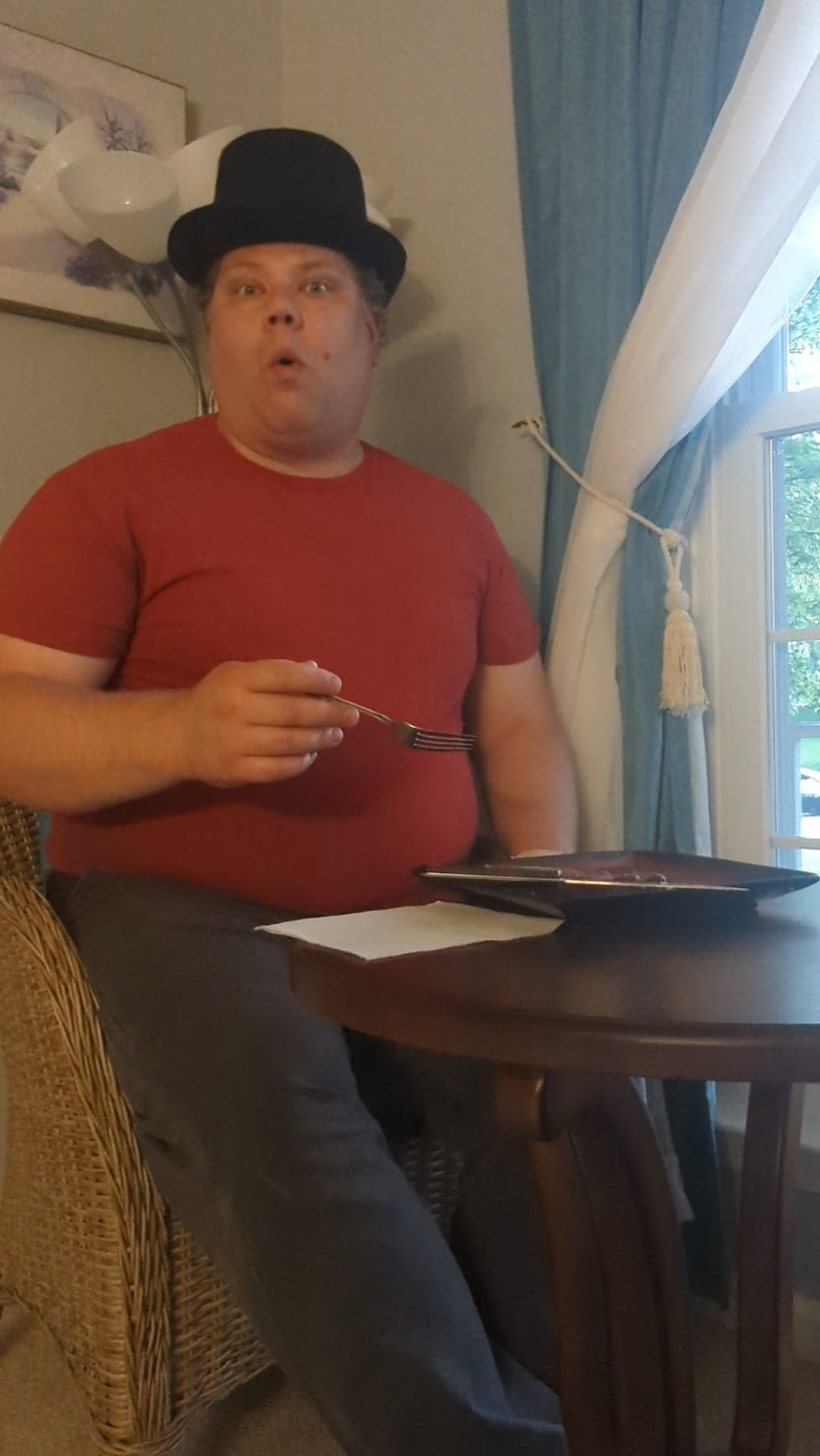
Daniel polished off the plate in a matter of minutes. I’m pretty sure we barely got the footage of him eating before it was gone. So, yes, I’m pretty sure this is a recipe I’ll be trying again.

 Forest Idylls