The most common misunderstanding when it comes to wagons is the type. The type of covered wagon used is a misconception that is addressed in almost any book talking about the trail, yet is so widespread that most people still think of Conestoga wagons when thinking about the Oregon/California Trail. I even recently saw an excerpt of a published book mentioning Conestoga wagons headed to Oregon, which, I admit, gave me physical pain. The first research book an author cracks open about the trail would have told him/her that, in fact, Prairie Schooners were used, not Conestoga.
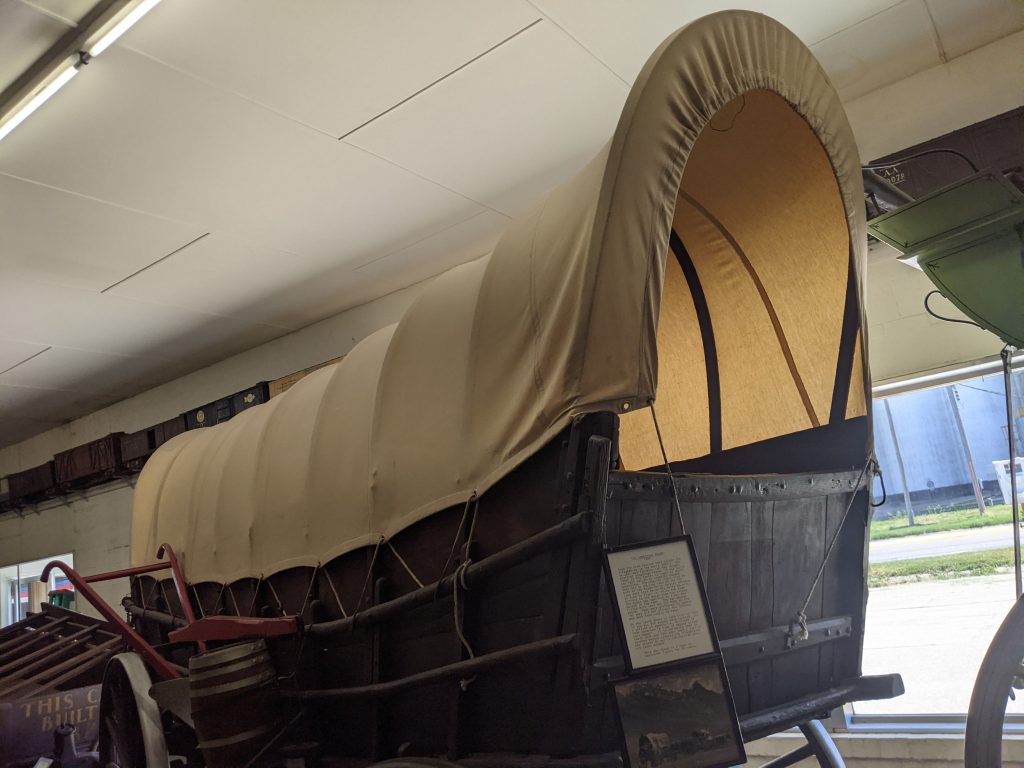

I know they look similar, but Schooners were smaller and lighter than the Conestogas, making them ideal for crossing the prairie and, especially, the Rockies, whereas the Conestoga wagons were too heavy for the oxen, let alone to cross the mountains and were more often used for freight or on the Santa Fe trail.
Named for the white canvas that made them look like sailboats crossing the prairie, schooners could be and certainly were often made by blacksmiths, but often they were simply farm wagons, modified for the long journey. They were typically between 9-10 feet long and 4 feet wide…and yes, pioneers had to fit all their belongings into them. The canvas stretching over the hickory bows was usually made waterproof by linseed oil, sometimes paint, and it was not uncommon to have pockets sewn on the inside to create more much-needed storage space. Likewise, the outsides of the wagons were often laden down with tool boxes or storage spaces as well, and emigrants often found inventive ways to create additional space to try and squeeze everything in.

“He’d assured them the canvas was covered in linseed oil for waterproofing, and had then showed off his “specialty”—a backboard that was let down by chains to form a cupboard for daily provisions and to offer a more convenient space to prepare meals, and then proceeded to beam at them, his eagerness only satisfied when Mark offered him a tip.”
A Picture of the Past
The above description from my book came from an actual diary, proof of the ingenuity of some of the emigrants.
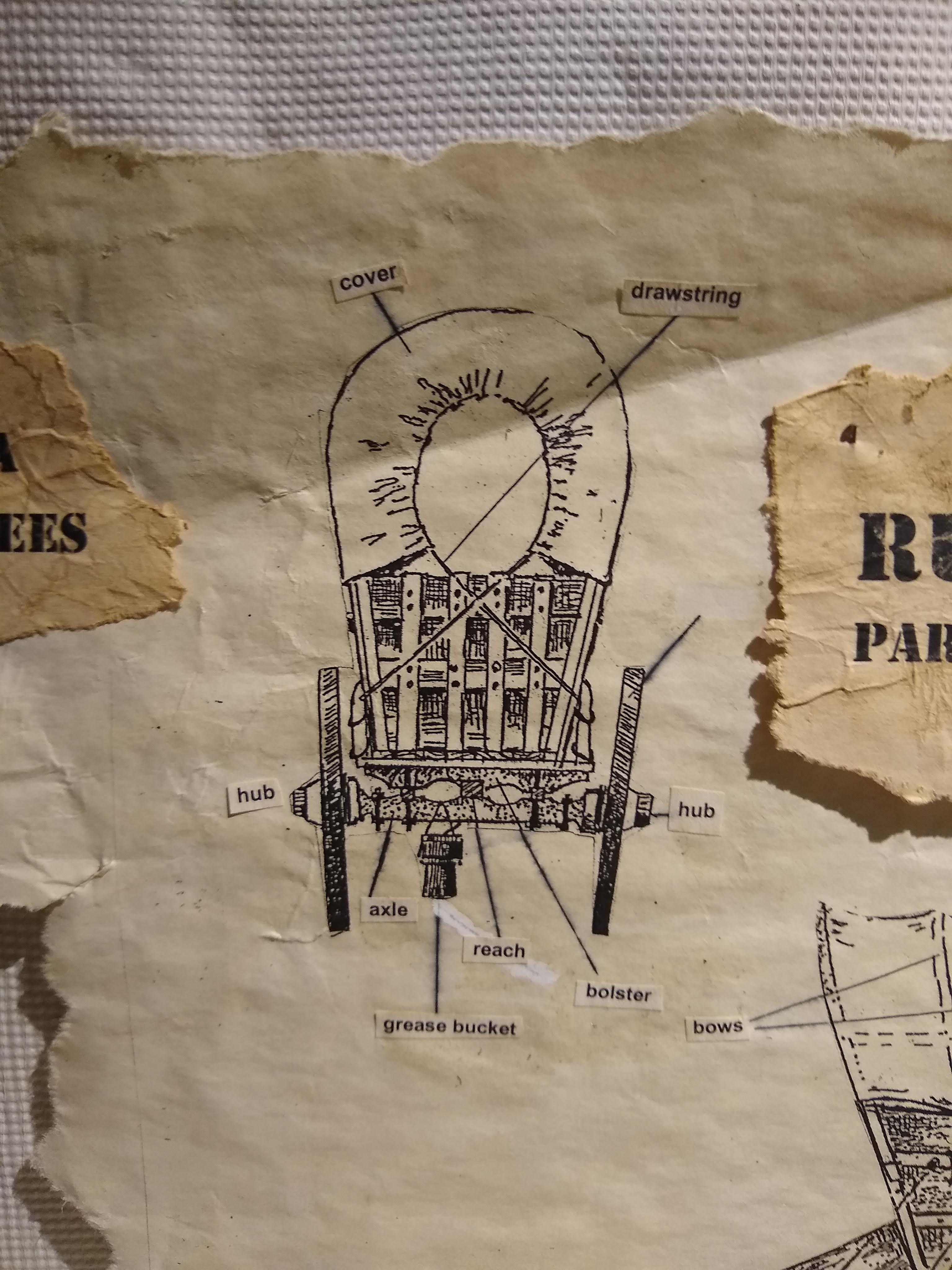
If you want a nice breakdown of each piece of the wagon, I highly recommend looking at the wagons page at the National Oregon/California Trail Center – I’d share them myself, but don’t know if they are copyrighted. I did, however, find the below charming, simple display at the Arrow Rock State Historic Site Visitor Center:

And finally, a random fact I discovered about wagons that is not generally known: despite the name and depiction of white canvas sails, it was actually not unusual for emigrants to paint their canvases! Some painted them in bright colors or covered them in cloth to reduce the sun’s glare. Some painted slogans on the side, such as Oregon or Bust, or political statements. One diary even mentions someone stitching the alphabet into the side of the canvas to school the children along the trail (yes, I worked that into my book as well).
Sometimes I wish we had a colored photo so we could have seen how it actually looked, that long line of prairie schooners with both white and colored sails, marching into the distance.
But I’ll leave you all be for now, and look forward to next time!
P.S. If you want a few random 19th century home remedies, check out today’s Instagram post.
Resources:
- 2013, Lyn Topinka. “The Columbia River – Prairie Schooner, The Oregon Trail.” The Columbia River – Prairie Schooner, The Oregon Trail, n.d. http://columbiariverimages.com/Regions/Places/prairie_schooner.html.
- Encyclopedia Britannica. “Prairie Schooner | Wagon History & Design,” n.d. https://www.britannica.com/technology/prairie-schooner.
- The Wagon – Learn about Covered Wagons used on the Oregon/California National Trail. “The Wagon – Learn about Covered Wagons Used on the Oregon/California National Trail,” n.d. https://oregontrailcenter.org/the-wagon.
- Nemec, Bethany. “Wagons – End of the Oregon Trail.” Wagons – End of the Oregon Trail, April 3, 2019. https://historicoregoncity.org/2019/04/03/wagons/.
 Forest Idylls